
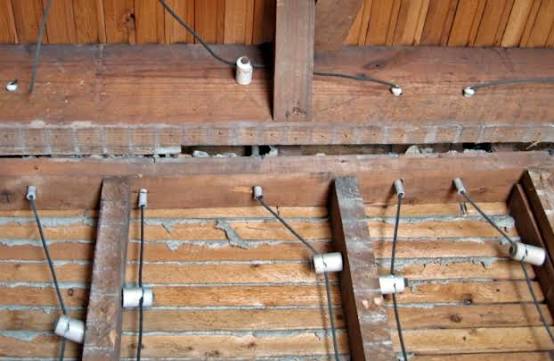
Hey there. For the last ten years, I’ve made a career out of crawling through the attics and basements of Seattle’s most beautiful older homes. From charming Craftsman bungalows in Ballard to stately Victorians on Capitol Hill, I’ve seen the bones of this city. And as an electrical specialist who focuses on these historic properties, I can tell you, nothing gets my attention faster—or raises more red flags—than the discovery of active knob and tube wiring.
To the untrained eye, it looks like harmless, old-fashioned stuff. You’ll see white ceramic “knobs” nailing wires to the sides of joists and ceramic “tubes” guiding those wires through the lumber. It’s a relic, a piece of your home’s history. But let me be perfectly clear: if your Seattle home is still powered by this century-old system, you are living with a significant, undeniable risk. It’s not a matter of if this outdated wiring will cause a problem, but when. I’ve seen firsthand what can happen, and it’s my job to make sure you understand the stakes before it’s too late. This guide is the culmination of a decade of experience, designed to walk you through everything you need to know about knob and tube wiring replacement in Seattle. We’ll cover the dangers, the process, the costs, and the immense benefits of making this critical upgrade to your home.
Understanding the Hidden Dangers: Why Knob and Tube is a Ticking Time Bomb in Your Seattle Home
The first step in any home improvement journey is understanding the “why.” With knob and tube (K&T), the “why” is all about safety and functionality. This isn’t a cosmetic upgrade; it’s a fundamental fix to protect your family and your single largest investment. Let’s break down the specific risks that make this wiring system incompatible with modern life.
A Quick History Lesson: What is K&T and Why Was It in Every Old Seattle House?
To really get why this stuff is in your walls, you have to step back in time. Between the 1880s and the late 1940s, knob and tube was the gold standard for residential electrical wiring. Seattle was booming. The very homes we now cherish in neighborhoods like Queen Anne, Fremont, and Wallingford were going up, and they were being wired with what was then state-of-the-art technology.
The system is elegant in its simplicity. You have two main components: the ceramic knobs, which hold the wires securely off the wood framing, and the ceramic tubes, which act as protective sleeves where the wires pass through a joist. The wires themselves were copper conductors wrapped in a rubberized cloth insulation. Crucially, the “hot” wire and the “neutral” wire were run separately, often a foot or more apart. The genius of this design, for its time, was that it used open air as an insulator and a way to dissipate heat. The wires could stay cool because air was constantly circulating around them.
But here’s the catch: this was an era when a home’s entire electrical demand might be a few lightbulbs and maybe a radio. No one could have possibly conceived of a world with high-definition TVs, powerful computers, microwave ovens, air conditioners, and electric vehicle chargers. K&T was built for a different world, and that’s the fundamental source of its danger today.
: The #1 Hazard: Insulation Breakdown and Fire Risk – A Capitol Hill Cautionary Tale
I’ll never forget a call I got a few years back to a gorgeous Victorian on Capitol Hill. The homeowners were worried about a faint, intermittent burning smell. It took some serious detective work, but I finally traced it to the attic. There, I found exactly what I feared. The original rubber insulation on the K&T wiring, after nearly a century of existence, had become brittle and dry. It had flaked off in numerous spots, leaving the live copper wire completely exposed.
But that wasn’t the worst part. At some point, a well-meaning but misguided contractor had blown modern insulation all over the attic floor, completely burying the old K&T system. This is a catastrophic mistake. Remember how K&T was designed to be cooled by open air? When you smother it in insulation, you trap all the heat it generates. You effectively turn the wire into a heating element. In this home, the heat was slowly charring the surrounding insulation, creating that dangerous smell. They were one surge or short away from a major electrical fire.
After 80, 90, or 100 years, that old cloth-and-rubber insulation doesn’t stand a chance. It crumbles at the slightest touch. It gets chewed on by rodents. It becomes brittle and falls away on its own. This leaves live, uninsulated wires dangling in the hidden spaces of your home—a primary source of fire risk just waiting for the right conditions.
The Grounding Problem: Why K&T Lacks This Essential Modern Safety Feature
Go pick up any modern appliance—your toaster, your laptop, your hair dryer—and look at the plug. You’ll almost certainly see three prongs. That third, rounded prong is the ground. It is arguably one of the most important safety innovations in electrical history. In the event of a fault where electricity could energize the metal casing of an appliance, the ground wire provides a safe path for that dangerous current to travel directly to the earth, usually tripping the circuit breaker and shutting off the power instantly. It’s what protects you from a nasty electrical shock.
Knob and tube wiring has no ground wire. It is a two-wire system only (a hot and a neutral). This means there is no dedicated safety path for fault current. Instead of going to the ground, that electricity can energize the metal body of your computer, your lamp, or your kitchen mixer. The next person to touch it becomes the path to ground. This is why outlets in older, un-updated homes only have two slots.
A dangerously common and illegal “fix” I see is when someone replaces these two-slot outlets with modern-looking three-slot outlets without actually running a new ground wire. This is called a “false ground” and it’s incredibly deceptive. It gives you the illusion of safety while providing none. You’re plugging your expensive, sensitive electronics into an unprotected outlet, and you’re putting your family at risk of shock.
The Insurance & Real Estate Nightmare: How K&T Sinks Your Home’s Value in the Seattle Market
In a real estate market as hot and competitive as Seattle’s, knob and tube wiring can be a deal-killer. I work with real estate agents and home inspectors every week, and the trend is clear: insurance companies are running from K&T. Many major carriers in Washington State will now flat-out refuse to write a new policy for a home with active knob and tube, or they’ll charge an astronomical premium for the privilege. No insurance means no mortgage. This instantly shrinks your pool of potential buyers from everyone to just cash buyers, dramatically reducing your home’s marketability.
Even if a buyer can find insurance, the presence of K&T will be a giant red flag on the home inspection report. Any savvy buyer (and their agent) will use this as a powerful negotiation tool, demanding a huge credit to cover the cost of a full knob and tube wiring replacement in Seattle. They will often overestimate this cost, putting you, the seller, in a terrible bargaining position. By proactively replacing the wiring before you list, you remove this major obstacle, protect your investment, and present a safer, more desirable product to the market.
Mismatch with Modern Life: Why 100-Year-Old Wires Can’t Handle 21st-Century Power Demands
Think about this: when your home was built, the entire house might have been serviced by a 15- or 30-amp electrical service. Today, a single kitchen circuit is often 20 amps just to handle a microwave and a coffee maker. The original K&T system was designed to handle maybe 60 amps for the entire house. A standard modern electrical panel starts at 125 amps, and 200-amp services are now the norm, especially as we add things like tankless water heaters and EV chargers.
When you try to pull modern amounts of power through this antique wiring, you are dangerously overloading it. This overload causes the wires to heat up, which accelerates the decay of the already-fragile insulation and dramatically increases the risk of fire. Do your lights flicker when the fridge kicks on? Do you blow fuses or trip breakers constantly? These aren’t just minor annoyances; they are the screams of an electrical system that is being pushed far beyond its limits. It simply wasn’t designed for our power-hungry lifestyle.
What Seattle and King County Building Codes Say About Knob and Tube Wiring
While there isn’t a law that says you must rip out all K&T just because it exists, the local building codes are very clear about what you can’t do. The Seattle Department of Construction & Inspections (SDCI), which adopts the National Electrical Code (NEC), strictly prohibits the extension of an existing knob and tube circuit. This means if you’re remodeling your kitchen or bathroom, or doing any work that requires an electrical permit, an inspector will almost certainly require you to replace any and all K&T wiring affected by that project.
Furthermore, the NEC explicitly forbids placing insulation in contact with knob and tube wiring. With the big push for energy efficiency and programs that encourage adding insulation to older homes, this puts homeowners in a bind. You can’t make your home more energy-efficient without first addressing the outdated wiring. Trying to work around these codes is not only illegal—risking fines and failed inspections—but it also puts your home and family in needless danger. Doing it right is the only path to long-term safety, compliance, and peace of mind.
The Process of a Knob and Tube Wiring Replacement in Seattle: What to Expect When the Pros Take Over
Okay, so you’re convinced. The K&T has to go. The next logical question is, “What on earth is this going to be like?” Many homeowners picture a nightmare scenario of demolished walls and dust everywhere for weeks on end. I’m here to tell you that with the right team, it’s a far more controlled and strategic process than you might think. A professional rewire is surgery, not demolition. Let’s walk through the typical stages of the operation.
Step 1: The Comprehensive Assessment & Strategic Plan – More Than Just a Visual Look-See
Before a single tool is lifted, a good contractor will perform a deep-dive assessment of your home. This is where my team and I spend a significant amount of time. We’re not just looking for the visible K&T in the basement or attic. We’re mapping out your entire electrical system. We identify every outlet, every switch, and every light fixture. We use circuit tracers and testers to figure out what’s connected to what.
The goal is to create a detailed “battle plan.” We determine the best pathways for new wiring, identify which walls will need small, strategic openings, and plan the sequence of work to minimize disruption to your daily life. We’ll discuss your future needs—do you want to add an EV charger? Put a home office in the spare bedroom? Install recessed lighting in the living room? Now is the time to plan for those upgrades. This initial planning phase is what separates a smooth, efficient project from a chaotic one. It’s about being methodical and thinking three steps ahead.
Step 2: Prepping Your Home: How We Minimize Dust and Disruption During the Rewire
We respect that we’re working in your home, not a construction site. On day one, our first job is to protect everything. We lay down heavy-duty floor coverings, from the front door to all work areas. Furniture is carefully moved to the center of rooms and covered with plastic sheeting. We use zip-wall systems—essentially plastic dust barriers with zippers for entry and exit—to isolate the areas where we’ll be cutting into walls or ceilings.
This containment is critical. Yes, there will be some dust from cutting drywall or plaster, but our goal is to keep it confined to the immediate work area. We also set up fans and air scrubbers with HEPA filters to capture airborne dust, keeping the air in the rest of your house clean. It’s all about meticulous preparation. A little extra time spent on prep saves a massive headache in cleanup later.
Step 3: The Art of “Fishing” Wires: How Skilled Electricians Navigate Your Walls with Minimal Intrusion
This is where the real magic happens. The term we use is “fishing,” and it’s a skill that takes years to perfect, especially in older homes with their quirky framing and fire blocks. Instead of ripping out huge sections of your walls, we make small, precise openings, typically a few inches in size, near the top of the wall and down by the outlet or switch.
Using flexible drill bits and long, fiberglass “fish sticks,” we carefully guide the new, modern Romex® wiring through the wall cavities from the attic or basement. It’s a game of patience and finesse. We learn to feel for obstructions and navigate around them. In a lath and plaster wall, this is even more of a challenge, requiring a delicate touch to avoid unnecessary cracking. The goal is always to use the smallest holes possible to get the job done. An experienced electrician can rewire an entire room with only a handful of small, easily-patched holes, preserving the integrity of your beautiful old walls.
Step 4: The Panel Upgrade: Why a Rewire Almost Always Means a New Electrical Panel
If your home still has K&T wiring, there’s a very high probability that your main electrical panel is also dangerously outdated. You might have an old fuse box or a small, first-generation breaker panel with limited capacity. These old panels are the heart of the problem; they are not equipped to handle the load of a modern home or provide the safety features we now rely on.
Therefore, a full knob and tube wiring replacement in Seattle almost always includes a main service panel upgrade. We’ll replace that old box with a new, 200-amp panel. This gives you ample space for all your new circuits and plenty of room for future expansion. More importantly, the new panel will be equipped with modern Arc Fault Circuit Interrupter (AFCI) and Ground Fault Circuit Interrupter (GFCI) breakers, as required by current code. These smart breakers can detect dangerous electrical arcs or ground faults and shut off the power in milliseconds, providing a level of protection that old fuse boxes could never offer.
Step 5: Permits and Inspections: Navigating the Seattle Department of Construction & Inspections (SDCI)
Any legitimate electrical contractor will handle the entire permitting process for you. This is a non-negotiable part of the job. We submit the plans and paperwork to the SDCI, pay the fees, and schedule the required inspections. In Seattle, a full rewire typically requires two inspections: a “rough-in” inspection and a “final” inspection.
The rough-in inspection happens after all the new wires have been run, but before the walls are closed up. The city inspector will come to your home and meticulously check our work, ensuring that all wiring has been installed correctly, secured properly, and meets all current NEC and local code requirements. Once we pass this inspection, we can proceed with patching the walls. The final inspection occurs after all the outlets, switches, and fixtures are installed and the power is turned on. The inspector verifies that everything is working correctly and safely. This third-party verification is your ultimate assurance that the job was done right.
Step 6: The Final Patch and Paint: Putting Your Ballard or Queen Anne Home Back Together
Once the final electrical inspection is passed, the last step is to restore your home to its original condition. This is where those small, strategic holes we made come into play. A professional drywall or plaster specialist will come in to patch them. This is another area where skill matters. A good patch on a plaster wall should be virtually invisible once it’s sanded and textured to match the surrounding surface.
Most top-tier electrical contractors who specialize in rewires have trusted drywall and painting partners they work with, or even have them on staff. We can coordinate this for you, rolling the cost into the total project quote. This ensures a seamless transition from the electrical work to the cosmetic restoration. When we leave, the only evidence that we were ever there should be your new, safe, and reliable outlets and switches.
Breaking Down the Budget: How Much Does Knob and Tube Wiring Replacement in Seattle Really Cost?
This is the million-dollar question, isn’t it? Or, more accurately, the several-thousand-dollar question. I’m not going to sugarcoat it: a full rewire is a significant investment. But it’s just that—an investment in your home’s safety, value, and future. The price can vary widely, so it’s important to understand what factors drive the cost. Let’s pull back the curtain on the finances of a knob and tube wiring replacement in Seattle.
The Core Cost Factors: Home Size, Accessibility, and Scope of the System
There is no one-size-fits-all price. The final quote will depend on a few key variables:
- Home Size: This is the most obvious factor. A 3,000-square-foot home in Laurelhurst will have more wiring, more outlets, and more circuits than a 1,200-square-foot bungalow in Greenwood. More materials and more labor hours equal a higher cost.
- Accessibility: This is a huge one. Is your basement finished or is it an open, unfinished space where we can easily run wires? Is your attic a cramped crawlspace or a wide-open area? Homes with finished basements, multiple stories, and complex rooflines require more labor to fish wires, which increases the cost. A simple, single-story home with an accessible attic and basement is the most straightforward and thus, the most affordable to rewire.
- Scope of the System: How much K&T is actually in the house? In some homes, a previous owner may have partially updated the wiring, leaving only a few circuits of K&T. In others, it’s 100% original. We also need to factor in the number of devices. A room with six recessed lights, four outlets, and three-way switches is more complex than a room with one light and one outlet.
The Average Cost Per Square Foot in the Greater Seattle Area
While I hesitate to give a flat number without seeing a home, homeowners in the Seattle area can generally expect the cost for a full knob and tube replacement to fall somewhere between $8 and $15 per square foot.
So, for a 1,500-square-foot home, you might be looking at a range of $12,000 to $22,500. For a larger 2,500-square-foot home, the range could be $20,000 to $37,500.
This is a broad range, I know. A simple, accessible home might be on the lower end, while a complex, multi-story home with difficult access and plaster walls will be on the higher end. This price should ideally be all-inclusive, covering the labor, new wiring, new outlets/switches, a new electrical panel, and the permit fees.
The “Hidden” Costs to Plan For: Drywall Repair, Painting, and That Inevitable Panel Upgrade
A good quote will be transparent about what is and isn’t included. Be sure to clarify these items:
- Drywall/Plaster Repair: As I mentioned, we have to make holes. The cost to patch these holes is often a separate line item or may not be included at all by some contractors. A quality electrical contractor will have a solution for this, either in-house or through a trusted partner. Expect this to add 10-15% to the project cost.
- Painting: Even the best patch needs to be primed and painted to match the existing wall. This is almost always the homeowner’s responsibility or a separate contract.
- The Panel Upgrade: If a contractor gives you a price for a rewire but doesn’t mention the main panel, be wary. As we discussed, a panel upgrade is almost always necessary. This can cost between $2,500 and $5,000 on its own, so ensure it’s included in your total project quote.
- Lighting Fixtures: The quote will cover the installation of new fixtures, but not the cost of the fixtures themselves. If you want to replace your old light fixtures with new ones, you’ll need to budget for that separately.
How to Compare Apples to Apples: Reading and Understanding Quotes from Local Electrical Contractors
Getting multiple quotes is smart, but it’s only useful if you can compare them accurately. When you get a bid, don’t just look at the bottom-line number. Look for a detailed scope of work. A professional quote should clearly list:
- The total number of outlets, switches, and light fixtures being replaced.
- The size and brand of the new electrical panel.
- Confirmation that all new circuits will have AFCI/GFCI protection as required by code.
- A statement that they will pull all necessary permits and schedule inspections.
- A clear breakdown of what is included for wall repair and what isn’t.
- The warranty they offer on labor and materials.
A lowball bid that is vague or missing these details is a major red flag. They are likely cutting corners, perhaps by not pulling permits or by leaving you with a mess of unpatched holes. The cheapest bid is rarely the best value.
Is It a Good Investment? Calculating the ROI in Home Value, Safety, and Insurability
This is where the cost starts to make a lot more sense. Think of it less as an expense and more as a transfer of equity. You are taking a liability (old, unsafe wiring) and converting it into an asset (a modern, safe electrical system).
- Increased Home Value: In the Seattle market, a home with a brand-new electrical system is significantly more attractive than one with K&T. While you may not recoup 100% of the cost in a direct appraisal increase, you will absolutely sell your home faster and for a better price than if you hadn’t done the work. You eliminate a major negotiation point for buyers.
- Insurability: You turn your home from uninsurable or expensive-to-insure into a standard-risk property, saving you money on premiums every single year.
- Safety & Peace of Mind: How much is it worth to know that your family is safe from electrical fires? This return is immeasurable.
When you factor in the avoided price reduction during a home sale and the lower insurance costs, the net cost of the project becomes much more manageable.
Financing Options and Potential Rebates for Washington State Homeowners
A five-figure cost can be a lot to swallow at once. The good news is there are options. Many larger electrical contractors offer financing plans through third-party lenders, allowing you to pay for the project over time. You can also look into a Home Equity Line of Credit (HELOC) from your bank.
While direct rebates for K&T replacement are rare, sometimes they can be bundled with other energy-efficiency upgrades. Check with your local utility (like Seattle City Light) and the Database of State Incentives for Renewables & Efficiency (DSIRE) for any current programs that might apply, especially if you are combining the rewire with insulation or other upgrades.
Choosing the Right Electrical Contractor for Your Knob and Tube Wiring Replacement in Seattle
This is, without a doubt, the most important decision you will make in this entire process. The quality of the contractor you hire will determine the safety of the installation, the impact on your home, and your overall peace of mind. A knob and tube wiring replacement in Seattle is not a job for a handyman or a general electrician who dabbles in old homes. You need a specialist. Here’s how to find one.
Licensed, Bonded, and Insured is Non-Negotiable: Verifying Credentials with Washington L&I
This is the absolute baseline. Do not even consider talking to a contractor who cannot immediately prove they are licensed, bonded, and insured in the state of Washington.
- Licensed: This means they have met the state’s requirements for knowledge and experience. You can and should verify their license number on the Washington State Department of Labor & Industries (L&I) website.
- Bonded: The bond protects you, the homeowner. If the contractor fails to complete the job, doesn’t pay for permits, or otherwise causes you financial harm, you can make a claim against their bond to recover your losses.
- Insured: This refers to liability insurance. If they accidentally cause damage to your property (e.g., drill through a pipe) or if one of their workers gets injured on your property, their insurance covers it, not your homeowner’s policy.
Ask for their license number and proof of insurance. A reputable contractor will have this information readily available. If they hesitate, walk away.
Why You Need an Old Home Specialist, Not Just a General Electrician
I can’t stress this enough. Many perfectly competent electricians are fantastic at wiring new construction or commercial buildings. But working in a 100-year-old home is a completely different ballgame. It’s a sub-specialty.
An old home specialist understands:
- The Quirks of Old Framing: They know how to deal with fire blocks, balloon framing, and inconsistent stud spacing without having to tear open entire walls.
- The Fragility of Plaster: They have the delicate touch required to work with lath and plaster walls, minimizing cracking and damage.
- The Art of Fishing Wires: They have invested in the specialized tools and developed the patience and techniques to run wires with minimal intrusion.
- The Whole-House System: They see the rewire not just as a task, but as redesigning a complete system, from the service drop to the last outlet.
When you interview potential contractors, ask them specifically about their experience with homes of your vintage and in your neighborhood. Ask to see photos of past K&T replacement jobs. Their answers will quickly reveal if they are true specialists.
Reading Between the Lines of Local Reviews: What to Look For in Testimonials from Your Fremont or West Seattle Neighbors
Online reviews are a great tool, but you have to know how to read them. Don’t just look at the star rating. Dig into the actual comments. Look for reviews from people in Seattle neighborhoods known for older homes like Capitol Hill, Queen Anne, Wallingford, Fremont, or West Seattle.
Look for keywords that signal a quality job:
- “Clean” or “tidy”: This shows they respected the homeowner’s space.
- “Minimal holes” or “small patches”: This indicates they are skilled at fishing wires.
- “Great communication”: This means they kept the homeowner informed throughout the process.
- “On time and on budget”: This speaks to their professionalism and project management skills.
- “Passed inspection with no issues”: This is the ultimate proof of quality work.
Conversely, be wary of reviews that mention poor communication, a messy job site, or unexpected costs.
The Critical Questions to Ask Before You Hire (Beyond “How Much Will it Cost?”)
When you have a potential contractor at your home for a quote, treat it like a job interview. Here are the questions you need to ask:
- “How many knob and tube replacement projects have you completed in the last year?” (You want a high number).
- “Will your own employees be doing the work, or do you use subcontractors?” (In-house employees are often better).
- “Can you walk me through your process for protecting my home and minimizing dust?”
- “Who will be the project manager and my single point of contact?”
- “How do you handle unforeseen issues, like discovering asbestos or rot?”
- “What is your process for wall repair and patching?”
- “Can you provide me with references from 2-3 recent K&T replacement jobs?” (And actually call them!)
Their ability to answer these questions confidently and thoroughly will tell you a lot about their experience and professionalism.
Understanding the Warranty: What Should Be Covered in a Proper Guarantee?
A warranty is a contractor’s promise to stand behind their work. A reputable company should offer a multi-year warranty on their labor. A one-year warranty is the bare minimum; a 3- to 5-year warranty (or even longer) is a sign of a company that is confident in its quality.
The warranty should be in writing and should clearly state what is covered. It should cover the function of all new wiring, outlets, switches, and the main panel. Materials are often covered by a separate manufacturer’s warranty, but the contractor’s labor to replace a faulty part should be covered by their own warranty. Ask for a copy of the warranty and read it before you sign a contract.
Red Flags to Watch For: How to Spot an Unqualified Contractor and Avoid a Botched Job
Your gut instinct is a powerful tool. If something feels off, it probably is. Here are some major red flags to watch out for:
- A Vague or “Too Good to Be True” Quote: A low price often means they’re cutting corners.
- Pressure to Sign Immediately: A professional will give you time to consider your options.
- Requesting a Large Upfront Deposit: A small deposit to secure a spot on the schedule is normal. A request for 50% or more upfront is not.
- Hesitation to Provide License/Insurance Info: If they can’t or won’t provide it instantly, end the conversation.
- Suggesting You Don’t Need a Permit: This is illegal and a massive red flag. It means their work won’t be inspected and they are trying to avoid accountability.
- Bad Communication: If they are hard to get ahold of or unclear in their answers during the quoting process, imagine what it will be like once they have your money.
Choosing the right contractor is the difference between a smooth, successful project and a costly, stressful nightmare. Do your homework. It will pay off tenfold.
Life After K&T: The Tangible Benefits of a Modern Electrical System in Your Seattle Home
After the last patch is painted and the tools are packed away, you’re left with the results. And while the work itself is hidden behind your walls, the benefits are something you will experience every single day. Completing a knob and tube wiring replacement in Seattle is about more than just fixing a problem; it’s about transforming your relationship with your home and unlocking its full potential.
The Priceless Peace of Mind: Sleeping Soundly Knowing Your Home is Safe
Let’s start with the most important benefit, the one you can’t put a price tag on. It’s the quiet confidence that comes from knowing your home’s electrical system is no longer a fire hazard. No more strange burning smells. No more worrying about what’s hidden in the walls. No more wondering if that flickering light is a minor annoyance or a sign of impending disaster. You’ve eliminated a primary source of fire risk and protected your family. That peace of mind is the single greatest return on your investment.
Increased Property Value and Marketability in Seattle’s Competitive Real Estate Scene
As we’ve discussed, K&T is a major liability when it comes time to sell. By replacing it, you’ve turned that liability into a powerful asset. You can now proudly advertise your home as having a “fully updated electrical system.” This is a huge selling point. It tells potential buyers that the home has been well-maintained and is move-in ready. It eliminates a major inspection issue, removes a huge negotiation chip from the buyer’s hand, and opens your home up to the entire market of buyers who need a mortgage. Your home will sell faster and for a higher price.
Lower Homeowner’s Insurance Premiums: How Insurers Reward You for Upgrading
Once the job is complete and has passed inspection, call your insurance agent immediately. Provide them with the documentation from the electrical contractor and the passed inspection report from the city. You should see a significant drop in your homeowner’s insurance premium. You’ve proactively mitigated a major risk, and insurance companies will reward you for it. This is a tangible, recurring saving that helps offset the initial cost of the project over time.
The Freedom to Power Your Life: Running Modern Appliances Without Worry
Remember when you couldn’t run the microwave and the toaster at the same time? Or when using a vacuum cleaner in the bedroom would trip a breaker? Those days are over. With a new 200-amp panel and dedicated circuits for your major appliances, you can finally use your home the way it’s meant to be used in the 21st century. You can run the air conditioner, charge your electronics, and use your power tools without a second thought. Your home’s electrical system will no longer be the limiting factor in your daily life.
Future-Proofing Your Home: Paving the Way for EVs, Solar, and Smart Home Tech
A rewire isn’t just about meeting today’s needs; it’s about preparing for tomorrow’s. The world is moving towards electrification. With your new 200-amp panel, you now have the capacity to easily add a Level 2 charger for an electric vehicle. You’re prepared for the possibility of adding solar panels to your roof. You can install a new heat pump or a tankless electric water heater. You can embrace smart home technology, from lighting to security, without worrying if your wiring can handle it. You’ve given your classic Seattle home a modern electrical backbone that will serve you well for decades to come.
Case Study: How a Rewire Transformed a Wallingford Craftsman into a Safe, Modern Haven
A couple of years ago, I worked with a family in a beautiful 1920s Craftsman in Wallingford. They loved the home’s character but were constantly frustrated by the electrical system. They had extension cords running everywhere, could only use one kitchen appliance at a time, and were paying a fortune for insurance. They were also nervous about the safety of their two young children.
We undertook a full rewire. It was a three-story home, so it was a complex job, but we planned it meticulously. We worked room by room to minimize disruption. We upgraded their old 60-amp fuse box to a 200-amp panel and ran new, grounded circuits everywhere. When we finished, the change was dramatic. They could finally install the modern kitchen they’d been dreaming of. They turned a spare bedroom into a fully-powered home office. Most importantly, they told me they could finally relax in their own home without a constant, low-level anxiety about the wiring. They saw it not as an expense, but as the key that unlocked their home’s true potential.
Frequently Asked Questions About Knob and Tube Wiring Replacement in Seattle
Over the years, I’ve heard every question imaginable about this process. Homeowners are rightfully curious and a little apprehensive. Here are straight, honest answers to the most common questions I get.
Can I live in my house during the rewire?
Absolutely. In fact, nearly all of our clients do. A professional crew will work to minimize disruption. We typically work on one or two areas of the house at a time. We set up temporary power if needed and ensure you have power to essential areas like the kitchen and bathrooms at the end of each day. It might be a little inconvenient, like living through any renovation, but it is entirely manageable.
How long does a full knob and tube replacement take?
This depends heavily on the size and complexity of your home. For an average-sized Seattle bungalow (around 1,200-1,
Your Partner for a Safer Seattle Home
Upgrading your home’s electrical system by replacing old knob and tube wiring is one of the most important investments you can make in your safety and property value. It’s a complex job, but as we’ve walked through, it’s a manageable process with incredible long-term benefits. While a full rewire is the ultimate solution for outdated systems, we understand that sometimes smaller issues arise that need immediate attention. Whether you’re dealing with a flickering light, a dead outlet, or a tripped breaker that won’t reset, these can be signs of underlying problems that require a professional diagnosis. For any immediate concerns or smaller jobs that don’t require a full-scale replacement, our team is always ready to help with expert electricity repair service in Seattle. Our priority is ensuring your home is safe, and we’re here to provide the right solution, big or small, to give you the peace of mind you deserve.