
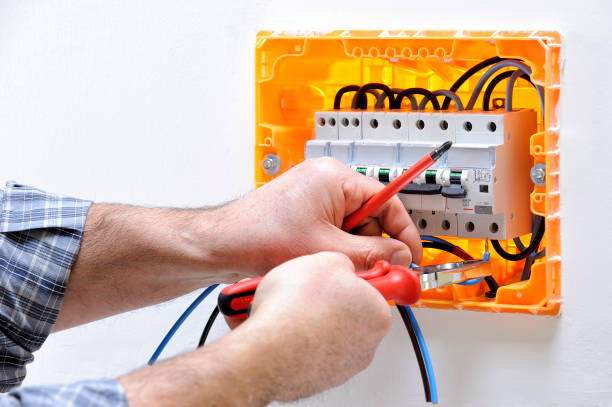
Hello, Seattle. My name is Leo, and for the better part of fifteen years, I’ve been the person you call when the lights go out and don’t come back on. I’ve spent my career navigating the unique electrical landscape of our city, from the historic knob-and-tube systems in Capitol Hill Victorians to the modern wiring in new Bellevue construction. I’ve seen everything from a simple faulty outlet to a full panel meltdown, and I’ve learned one crucial thing: electrical problems are more than just an inconvenience; they’re a direct threat to your home’s safety and your family’s peace of mind.
You’re here because something’s wrong. A light is flickering ominously. An outlet feels warm to the touch. A breaker trips every time you use the microwave. You typed “home electrical repair seattle” into your search bar looking for answers, and I’m here to give them to you. This isn’t just a sales page; this is a comprehensive guide born from thousands of service calls. We’re going to demystify the common electrical problems Seattle homeowners face, explain what’s happening behind your walls, and empower you to make safe, informed decisions. Your home is your sanctuary, and ensuring its electrical system is safe and reliable is my top priority.
Warning Signs: How to Identify When You Need Professional Home Electrical Repair in Seattle
Your home’s electrical system is like its central nervous system. When something is wrong, it will almost always send out warning signs. The trick is learning to recognize them and understanding that they are not minor quirks to be ignored, but urgent signals that demand attention. Ignoring these signs is like ignoring a check engine light; the problem will only get worse and potentially lead to catastrophic failure. As a seasoned electrician, I can tell you that the most devastating issues I’ve seen all started with a “minor” symptom. Let’s break down the most common red flags.
The Frequent Flyer: Understanding Why Your Circuit Breakers Keep Tripping
A circuit breaker that trips occasionally is doing its job. It’s a safety device designed to shut off power when it detects an overload or a fault. However, a breaker that trips frequently is a clear sign of a deeper problem. It’s your system’s way of screaming for help. There are three primary culprits:
- Circuit Overload: This is the most common reason. It happens when you try to draw more power from a circuit than it’s designed to handle. Think about your kitchen: if your microwave, coffee maker, and toaster are all on the same circuit and running simultaneously, the breaker will likely trip. This is especially common in older Seattle homes where entire rooms were often wired to a single 15-amp circuit. While a one-time overload isn’t a crisis, if it happens daily, it means your electrical system isn’t designed for your lifestyle. The solution isn’t to stop using your appliances; it’s to upgrade the circuit or add a new, dedicated one.
- Short Circuit: This is a more dangerous situation. A short circuit occurs when a “hot” wire touches a “neutral” wire or a ground wire. This creates a low-resistance path for the electricity, causing a massive surge of current that trips the breaker instantly. Shorts can be caused by damaged wire insulation, loose connections, or faulty appliance wiring. A short circuit is a significant fire hazard and needs to be diagnosed and repaired by a professional immediately.
- Ground Fault: This is similar to a short circuit but occurs when a hot wire touches a grounded part of an appliance or a grounded junction box. This can create a shock hazard. Ground Fault Circuit Interrupter (GFCI) outlets, required in kitchens, bathrooms, and outdoor areas, are specifically designed to detect this and shut off power in milliseconds to prevent electrocution.
If a breaker trips, don’t just keep resetting it. Unplug some devices from the circuit and try again. If it trips again with nothing plugged in, you likely have a short circuit in your wiring, and it’s time to call for professional home electrical repair in Seattle.
Flickering, Buzzing, and Dimming: What Your Lights and Outlets Are Trying to Tell You
Your lights and outlets should operate silently and consistently. Any deviation from this is a sign of a problem with the electrical current.
- Flickering or Dimming Lights: If a single light flickers, the problem might just be a loose bulb. But if lights flicker throughout the house, or if they dim whenever a large appliance like your A/C unit or refrigerator kicks on, it often points to a problem with your main electrical service or a loose connection in your breaker panel. This “arcing” from a loose connection generates immense heat and is a leading cause of electrical fires.
- Buzzing Sounds: Electricity should be silent. If you hear a buzzing, humming, or crackling sound coming from an outlet, switch, or your breaker panel, it’s an immediate red flag. This sound is often the noise of electricity arcing across a loose or corroded connection. It’s an active fire hazard. Shut off the breaker for that circuit immediately and call an electrician. Do not use that outlet or switch until it has been inspected.
- Outlets That Are Warm or Hot: A properly functioning outlet should never feel warm or hot to the touch. Heat is a byproduct of electrical resistance. A warm outlet indicates that there’s a loose connection, damaged wiring, or that the circuit is overloaded. The plastic can melt, and the surrounding wood framing can ignite. If you find a warm outlet, unplug everything from it and do not use it.
The Smell of Danger: Recognizing Odors That Signal an Electrical Emergency
Your sense of smell is a powerful diagnostic tool. There are a few distinct odors that should trigger an immediate call for emergency electrical service.
- A Sharp, Acrid Smell of Burning Plastic: This is the smell of melting insulation, outlets, or switch casings. It means a component is overheating to a dangerous degree.
- A “Fishy” or Urine-like Smell: This is a strange but very specific sign. Many modern electrical components, when they overheat to extreme temperatures, release chemicals that smell distinctly like fish or urine. If you notice this smell and can’t trace it to any other source, it’s very likely a serious electrical hazard.
- The Smell of Ozone: A faint, sharp smell similar to chlorine after a lightning strike can indicate electrical arcing.
If you smell any of these odors, don’t waste time looking for the source. Go to your breaker panel and shut off the main breaker to cut power to the entire house, and then call a 24/7 emergency electrician.
Outdated and Unsafe: Identifying Two-Prong Outlets and Other Antique Hardware
Sometimes, the problem isn’t a failure but an outdated design. If your home was built before the 1960s, you might have components that are no longer considered safe by modern standards.
- Two-Prong Outlets: These outlets lack a ground connection. As we discussed in the context of knob-and-tube wiring, the ground wire is a critical safety feature that protects you from electric shock. If your home still has two-prong outlets, your electronics and your family are not properly protected. Simply replacing them with three-prong outlets without running a new ground wire is illegal and creates a “false ground,” which is even more dangerous as it gives a false sense of security.
- Old Fuse Boxes: While fuse boxes can work, they are an antique technology with major drawbacks. They are prone to having the wrong size fuse installed, which negates their safety function. They are also inconvenient and not designed for modern power loads. Upgrading to a modern breaker panel is one of the most important safety improvements you can make.
- Aluminum Wiring: Used briefly in the 1960s and 70s, solid-conductor aluminum wiring is known to expand and contract at different rates than the copper and brass fittings it connects to. This leads to loose, arcing connections and is a well-documented fire hazard.
If your home has any of these features, it’s not a matter of if you’ll need an upgrade, but when. It’s wise to be proactive rather than waiting for a failure.
The Diagnostic Process: How a Professional Approaches Home Electrical Repair in Seattle
When you call my team for a repair, our first job isn’t just to fix the symptom; it’s to become a detective. A thorough and methodical diagnostic process is what separates a professional electrician from a handyman. We don’t just put a bandage on the problem; we find the root cause to ensure it never happens again. This process is all about safety, accuracy, and providing you with a clear, transparent solution.
The Initial Consultation: Listening is the First Step
The diagnostic process begins the moment you call us. We will ask you a series of specific questions:
- What exactly is happening? (e.g., “The breaker for the bedrooms trips.”)
- When does it happen? (e.g., “Only when I use a hairdryer.”)
- How long has it been happening?
- Have you noticed any other symptoms, like smells or sounds?
- How old is your home?
Your answers provide the first crucial clues. An experienced electrician can often form a preliminary hypothesis just from this initial conversation. This helps us arrive at your home with the right tools and a solid plan of attack.
The On-Site Investigation: From the Panel to the Problem
Once on-site, the physical investigation begins. We typically start at the heart of the system: your electrical panel.
- Panel Inspection: We open the panel and look for immediate red flags: Are there any signs of melting, scorching, or corrosion? Are the breakers from a reputable brand, or are they from a manufacturer known for high failure rates (like Federal Pacific or Zinsco)? Are the connections tight? We use a voltage tester to ensure the panel is receiving the correct power from the utility.
- Circuit Tracing: If the problem is on a specific circuit, we need to identify everything that’s on it. We use a professional circuit tracer. One part of the tool plugs into an outlet on the circuit, and the other part is a wand that we scan across the breakers in the panel. It will beep loudly when it finds the correct breaker. This confirms we are working on the right circuit and helps us understand the total potential load.
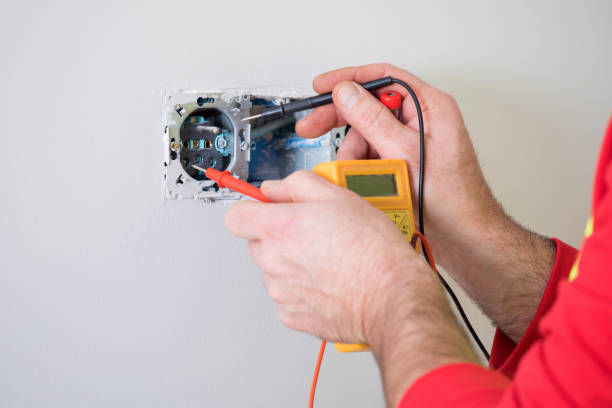
- Device-Level Inspection: We then move to the problem area. We’ll open up the outlets, switches, and light fixtures on the circuit. We’re looking for loose wire nuts, back-stabbed connections (a notoriously unreliable method), wires with damaged insulation, or signs of overheating. We use a multimeter to check for proper voltage and continuity.
Utilizing Advanced Diagnostic Tools
Beyond the basic hand tools, we employ specialized equipment to find hidden problems.
- Multimeter: This is our most-used tool. It measures voltage (to see if power is correct), resistance (to check for broken wires), and current (to see how much power a device is drawing).
- Thermal Imaging Camera: For intermittent or hard-to-find issues, a thermal camera is invaluable. We can scan your walls, ceilings, and electrical panel. Hot spots, which are invisible to the naked eye, show up brightly on the camera’s screen, instantly revealing an overheating wire, a loose connection, or a failing breaker. This allows us to find problems without needlessly cutting into your walls.
- AFCI/GFCI Testers: These tools do more than just the “test” button on your outlet. They simulate actual arc fault and ground fault conditions to ensure the safety devices will trip when they are truly needed.
The Diagnosis and a Clear Explanation
Once we have identified the root cause, the most important part of our job begins: explaining it to you. A good electrician will never just say, “It’s fixed.” We will show you the problem—the melted wire, the faulty breaker, the overloaded circuit—and explain why it failed and what we need to do to fix it correctly and safely.
We will provide you with a clear, upfront price for the repair before any work begins. This price should be flat-rate, not hourly, so you know exactly what the final cost will be. We’ll explain the options. For example, “The immediate fix is to replace this faulty outlet for $X. However, I’ve noticed this entire circuit is overloaded, and the long-term, safer solution is to run a new dedicated circuit for your home office for $Y.” This empowers you to make the best decision for your budget and your long-term safety.
Common Electrical Repairs in Seattle Homes and What They Involve
After diagnosing the issue, the next step is the repair itself. While every situation is unique, most repairs fall into a few common categories, especially in a city like Seattle with its diverse range of housing ages and styles. Here’s a look at some of the most frequent jobs we perform and what you can expect.
Outlet and Switch Replacement
This sounds simple, but doing it right is crucial. A faulty outlet or switch is a common point of failure.
- The Problem: Years of plugging and unplugging can wear out the internal contacts of an outlet, leading to loose connections. Switches have mechanical parts that can simply wear out. In other cases, the wiring connections on the back of the device can come loose.
- The Process: The repair involves more than just swapping the device. We first turn off the power at the breaker and confirm it’s off with a voltage tester. We remove the old device and inspect the wiring inside the box. We look for any signs of scorching or damaged insulation. We then install the new device, ensuring we use the proper screw terminals for a secure connection (we avoid “back-stabbing” the wires, as it’s less reliable). If the outlet is in a kitchen, bathroom, garage, or outdoors, we install a code-required GFCI outlet for shock protection. For bedrooms and living areas, we often recommend AFCI outlets, which can detect dangerous arcing and prevent fires.
Light Fixture and Ceiling Fan Installation/Repair
Improperly installed fixtures are a common issue we encounter.
- The Problem: A flickering light fixture might be a sign of a loose wire nut connection in the ceiling box. A wobbly ceiling fan is often due to it being mounted to a standard plastic electrical box instead of a specially-rated, heavy-duty fan brace box, which is a major safety hazard.
- The Process: For any ceiling work, safety is paramount. We ensure the power is off. For a new installation, we first determine if the existing electrical box is rated to support the weight of the fixture or fan. If not, we must replace it, which may involve some minor drywall cutting to install a proper fan brace that attaches securely to the ceiling joists. We then carefully wire the new fixture, ensuring all connections are tight and the fixture is securely mounted.
Dedicated Circuit Installation
This is the proper solution for frequently overloaded circuits.
- The Problem: Your 1950s rambler wasn’t designed for a modern home theater system, a high-powered gaming PC, or a portable air conditioner. These high-draw appliances need their own dedicated circuit to operate safely.
- The Process: This is a more involved repair. It involves running a new, modern electrical cable (like Romex®) from an open slot in your main electrical panel directly to a new outlet at the desired location. The complexity depends on the path. In a home with an unfinished basement or attic, it can be relatively straightforward. In a home with finished walls everywhere, it requires skill and specialized tools (“fish tape”) to guide the wire through wall cavities with minimal cutting. A new, dedicated circuit breaker is installed in the panel to protect the new circuit. This is the definitive fix for appliance-related overloads.
Electrical Panel and Breaker Replacement
The panel is the heart of your system, and when it fails, everything fails.
- The Problem: A breaker can fail internally, refusing to reset or tripping under no load. The main breaker can wear out. The “bus bars” that the breakers connect to can corrode or burn, creating poor connections for multiple circuits. And as mentioned, certain old panels (Federal Pacific, Zinsco) are known fire hazards that should be replaced on sight.
- The Process: Replacing a single breaker is usually a quick job. We turn off the main breaker, unclip the faulty breaker, and install a new one of the correct amperage and brand. A full panel replacement, however, is a major upgrade. It requires coordination with the utility company (like Seattle City Light) to temporarily shut off power to your home. We then remove the old panel, install a new, larger-capacity panel, connect all the existing circuits to new breakers, and ensure the system is properly grounded. This is a full-day job that requires a permit and an inspection from the city, but it dramatically improves the safety and capacity of your entire home. This is the cornerstone of a modern home electrical repair in Seattle.
Emergency Repairs: Storm Damage and Power Surges
Seattle isn’t immune to windstorms that can cause major electrical damage.
- The Problem: A falling tree branch can rip the main electrical service mast off the side of your house, a terrifying and extremely dangerous situation. A nearby lightning strike can send a massive power surge through your wiring, frying sensitive electronics and damaging outlets.
- The Process: In the case of a damaged service mast, the first call is to 911 and the utility company to report a downed power line. Once the utility makes the area safe, an emergency electrician is needed to rebuild the mast and the connection point on your home before the utility will restore power. For surge damage, our job is to go through the house circuit by circuit, testing every outlet and device to find what has been damaged and replace the compromised components. We also strongly recommend installing a whole-house surge protector at the main panel to guard against future events.
The Cost of Complacency vs. The Price of Repair: A Seattle Homeowner’s Financial Guide
One of the first questions I always get is, “How much is this going to cost?” It’s a fair and important question. While the cost of a professional repair can seem significant, it’s crucial to weigh it against the staggering potential cost of doing nothing. An electrical fire can cause hundreds of thousands of dollars in damage, not to mention the priceless loss of irreplaceable belongings and, in the worst cases, lives. Investing in a proper repair is an investment in insurance against that catastrophe.
Understanding Flat-Rate vs. Hourly Pricing
There are two main pricing models in the electrical trade. I am a firm believer in one over the other.
- Hourly Pricing: The contractor charges you a set rate for every hour they are on the job, plus the cost of materials. The problem? You have no idea what the final bill will be. If the job takes longer than expected, the cost balloons. This model incentivizes inefficiency.
- Flat-Rate, Upfront Pricing: This is the model my team and most reputable service companies use. After we diagnose the problem, we give you a firm, guaranteed price for the total repair from a standardized price book. You know the exact cost before any work begins. It doesn’t matter if the job takes us two hours or five; the price you agreed to is the price you pay. This provides transparency and peace of mind.
When getting quotes, always ask for a flat-rate price. If a contractor will only give you an hourly rate, be wary.
Ballpark Costs for Common Electrical Repairs in the Seattle Area
Prices can vary based on the complexity of the job, the age of the home, and the materials needed. However, to give you a general idea, here are some ballpark ranges for common jobs in the Seattle market. (Note: These are for professional, licensed, and insured work, including permits where required).
- Replace a Standard Outlet or Switch: $150 – $300. The price is higher for the first one due to the diagnostic and trip charge; additional outlets are less.
- Replace with a GFCI or AFCI Outlet: $200 – $400. The devices themselves are more expensive.
- Install a New Light Fixture (replacing an old one): $250 – $500. The cost depends on the fixture’s complexity and weight.
- Install a Ceiling Fan (with proper bracing): $450 – $800. This is more complex due to the need for a fan-rated box and brace.
- Install a New Dedicated 20-Amp Circuit: $800 – $2,000+. The price varies dramatically based on the distance from the panel and the difficulty of running the wire.
- Replace a Single Circuit Breaker: $250 – $450.
- Full Electrical Panel Upgrade (to 200 Amps): $3,500 – $7,000+. This is a major project involving significant labor and materials, as well as permit and inspection fees.
The Hidden Costs of “Cheap” Repairs
I’ve been called to fix the work of “cheap” electricians more times than I can count. A lowball offer is almost always a red flag. Here’s what it often means:
- No License or Insurance: If something goes wrong, you have no recourse. If they get hurt on your property, they could sue you.
- No Permit: This is illegal. It means their work will not be inspected by the city for safety and compliance. This can cause major problems when you try to sell your home.
- Cutting Corners: They might use cheap, unreliable materials. They might take unsafe shortcuts, like creating a false ground instead of running a new wire.
- Leaving a Mess: They won’t respect your home, leaving dust and debris everywhere.
The money you think you’re saving on a cheap repair will almost always be spent later fixing their mistakes, often at a much higher cost. When it comes to electricity, doing it right the first time is the only option.
Choosing the Right Professional for Your Home Electrical Repair in Seattle
Finding a qualified, trustworthy electrician is the single most important step in this process. The safety of your home is literally in their hands. In a market like Seattle, you have many options, but not all are created equal. You need to do your due diligence to find a true professional who will prioritize your safety and provide lasting, quality work.
The Non-Negotiables: License, Insurance, and Bonding
Do not even consider hiring anyone who cannot immediately provide proof of these three things:
- Washington State Electrical License: This proves they have the training, knowledge, and experience required by the state. You can verify their license number on the Washington Department of Labor & Industries (L&I) website. A company will have a contractor license, and the individuals performing the work will have electrician licenses.
- Liability Insurance: This protects your property. If they accidentally drill through a water pipe or cause a fire, their insurance policy covers the damage, not your homeowner’s policy. Ask for a copy of their insurance certificate.
- Bonding: This protects you financially. If the contractor takes your deposit and disappears, or fails to pay for materials, you can file a claim against their bond to recover your losses.
A professional company will proudly display their license number on their website, trucks, and business cards. If you have to hunt for it, that’s a red flag.
Look for a Specialist in Residential Service
The world of electrical work is vast. There are commercial electricians who wire office buildings, industrial electricians who work in factories, and residential electricians. You want a residential service specialist. This is a company whose primary business is diagnosing and repairing issues in existing homes.
Why? Because they are experts in the exact kind of work you need. They are skilled at troubleshooting. They know how to fish wires through finished walls with minimal damage. They understand the unique challenges of older Seattle homes. They are equipped for service calls, with well-stocked trucks and efficient diagnostic procedures. An electrician who primarily wires new construction may be less experienced at the delicate “surgical” work that residential repair requires.
Read Online Reviews with a Critical Eye
Online reviews on platforms like Google, Yelp, and Angi are incredibly valuable, but you need to know how to interpret them.
- Look for Recent Reviews: A company that was great five years ago might not be today. Focus on reviews from the last 6-12 months.
- Read the Content, Not Just the Star Rating: A 5-star review that just says “Great job” is less helpful than a 4-star review that says, “They were on time, explained everything clearly, and cleaned up after themselves, but it was a bit more expensive than I hoped.”
- Look for Keywords: Search the reviews for terms that matter to you: “on time,” “professional,” “clean,” “explained the problem,” “upfront pricing,” “fixed it right the first time.” These are the hallmarks of a great service experience.
- How Do They Handle Bad Reviews? Every company gets a bad review eventually. Look at how they respond. Do they respond professionally and try to make it right? Or do they get defensive and blame the customer? Their response tells you a lot about their commitment to customer satisfaction.
The Importance of a Professional Presence
While it might seem superficial, a company’s professional image matters.
- Website: Is their website professional and informative? Does it clearly list their services and license number?
- Communication: When you call, does a professional, knowledgeable person answer the phone? Can they answer your basic questions?
- Appearance: Do their electricians arrive in a clearly marked company vehicle, wearing a uniform? This shows a level of accountability and professionalism.
These elements are signs of a well-run, stable business that will be around to stand behind its work, as opposed to a “guy in a truck” who might be impossible to find if a problem arises later. When you need home electrical repair in Seattle, you want a company that invests in its reputation and its people.
Your Partner for a Safer Seattle Home
Upgrading and repairing your home’s electrical system is one of the most important investments you can make in your safety and property value. It’s a complex world, but I hope this guide has illuminated the risks, demystified the process, and empowered you to take action. From a simple outlet repair to a full panel upgrade, every step you take towards a safer, more reliable electrical system is a step in the right direction.
We understand that electrical issues can be stressful and disruptive. Our entire process is designed to alleviate that stress. With transparent, upfront pricing, clear communication, and a team of licensed, highly-trained residential service specialists, we aim to provide not just a repair, but a solution and peace of mind. If you’re experiencing any of the warning signs we’ve discussed, or if you simply feel that it’s time to have your older home’s system evaluated, we are here to help. Your safety is our singular focus. Contact us today, and let’s work together to make your Seattle home the safe, reliable sanctuary it’s meant to be.
From Minor Annoyance to Major Solution: Your Next Step
We’ve covered a lot of ground, from the subtle hum of a faulty switch to the comprehensive process of a full panel upgrade. Understanding these issues is the first step, but taking action is what truly protects your home. Perhaps the most common and frustrating symptom homeowners face is a breaker that keeps tripping, turning a simple task like making toast into a game of chance. If this sounds familiar, we’ve created a detailed guide specifically to help you understand why your breaker keeps tripping in Seattle, which can help you troubleshoot the immediate issue. However, whether your problem is a frequently tripping breaker or any of the other warning signs we’ve discussed, the underlying message is the same: your electrical system needs professional attention. For any and all urgent electrical needs, from diagnosis to emergency repair, our team is ready to provide fast, reliable, and safe solutions. We encourage you to visit our emergency electrician Seattle homepage to learn more about our full range of services and our commitment to keeping your home and family safe, 24/7.