
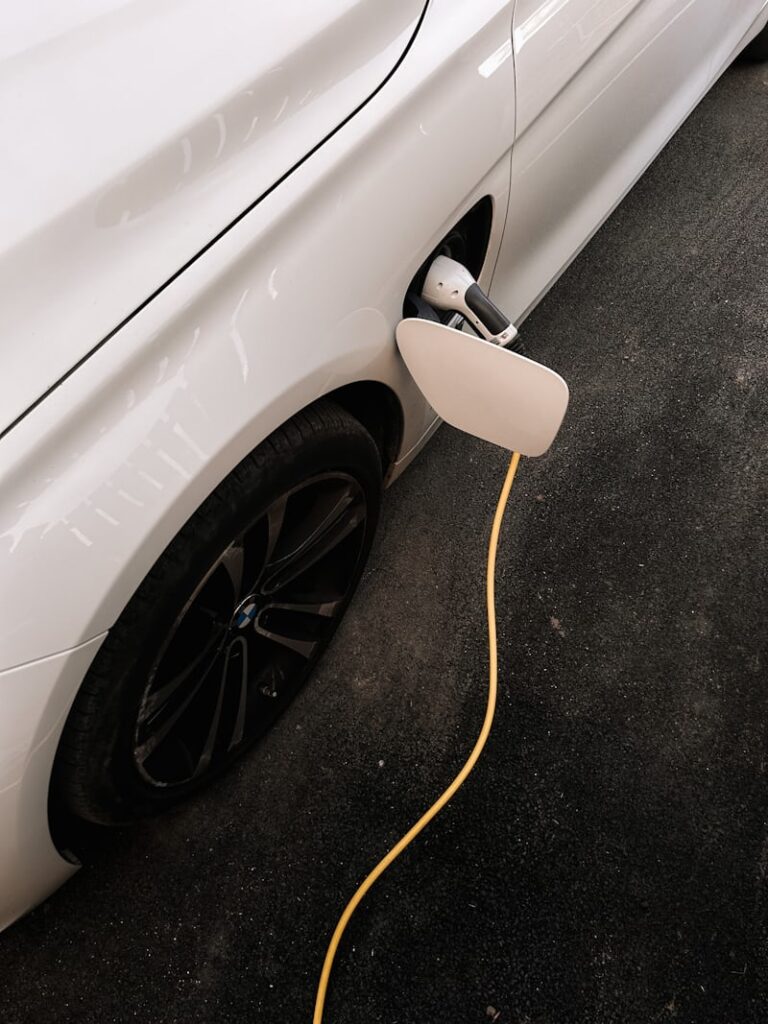
If you just bought a Tesla, a Rivian, or even a used Nissan Leaf—and you live in Seattle—you’ve probably already Googled “electrician car charger Seattle” at least once. Maybe twice at 2 a.m., panicking because your Level 1 cord takes 40 hours to charge, and your garage has one lonely outlet from 1978.
I get it. I’ve been there. For over 10 years, I’ve been the guy crawling through damp Seattle garages in Capitol Hill, running conduit under Ballard driveways, and upgrading 60-amp panels in Queen Anne fixer-uppers—all so homeowners like you can plug in safely, legally, and without blowing a fuse (literally).
Here’s the truth no one tells you: Plugging your EV into a random garage outlet isn’t just slow—it could be dangerous. And in Seattle? It’s likely against code.
Washington State, Seattle City Light, and the National Electrical Code (NEC 2023) have very clear rules about how EV chargers must be installed. And if you skip the pro? You risk:
- Tripping your main breaker every time you charge
- Failing a home inspection when you sell
- Voiding your EV warranty (yes, Tesla checks this)
- Getting denied an insurance claim if something goes wrong
But don’t worry—this isn’t doom and gloom. In fact, once you work with the right electrician, home EV charging becomes the easiest part of owning an electric car.
And if you’re not sure whether you need a full panel upgrade or just a simple outlet install, start by reading my detailed breakdown on how to find an electrician for EV charger installation in Seattle — it covers the exact questions to ask and red flags to avoid.
Now, let’s cut through the jargon and talk about what actually matters for your Seattle home.
Electrician Car Charger Seattle
Seattle’s Electrical Reality: Old Panels, Knob-and-Tube Wiring, and Why Your EV Needs More Than an Outlet
Let’s be brutally honest: most Seattle homes were not built for EVs.
Think about it:
- 60% of homes in Seattle were built before 1980
- Many still have 60-amp or 100-amp main panels
- Garages often have one 15-amp circuit shared with lights and tools
Your average Level 2 EV charger draws 30–48 amps continuously. That’s like running your oven, dryer, and AC at the same time—on a circuit never designed for it.
I had a client in West Seattle last fall. He plugged his Chevrolet Bolt into a standard garage outlet using the Level 1 cord. Fine, right? Except that outlet was on the same circuit as his fridge. Every time the Bolt charged overnight, the fridge compressor kicked on—and the whole circuit overheated. The insulation melted. We found it during a routine inspection. One more week, and it could’ve sparked a fire.
That’s why “just plugging in” isn’t safe. Your EV needs a dedicated circuit, installed by a licensed electrician, sized correctly for your charger and home.
Washington State Law & NEC 2023: What’s Actually Required for Legal EV Charger Installation
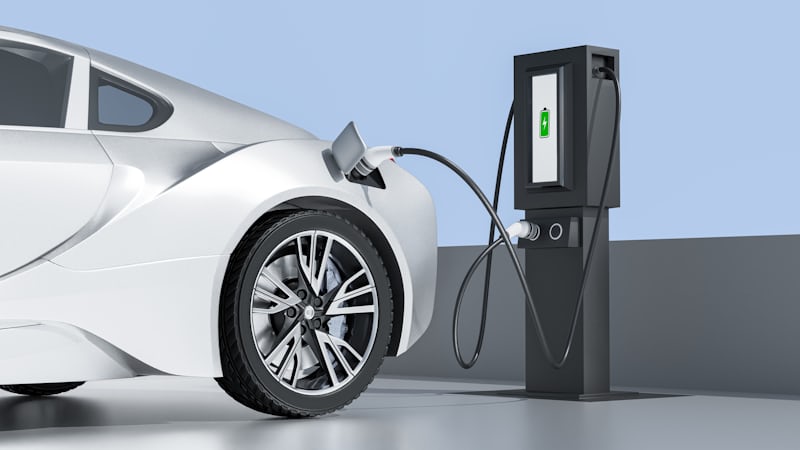
As of 2024, Washington State enforces the 2023 National Electrical Code (NEC), which includes specific rules for EV charging:
- All Level 2 EV chargers must be on a dedicated 240V circuit
- Hardwired units must have a disconnect switch within sight (or be plug-connected)
- Outdoor or garage chargers must be rated for damp/wet locations
- Panel load calculations must prove your system can handle the added demand
- Permits and inspections are required for all new circuits over 20 amps
In Seattle, the Department of Construction & Inspections (SDCI) takes this seriously. No permit? No legal install. And if you sell your home, buyers can demand proof of compliance.
Real Horror Stories: When DIY EV Chargers Caused Panel Fires in Ballard & West Seattle
I don’t like scare tactics—but facts are facts.
In 2023, the Seattle Fire Department responded to 12 residential electrical fires linked to improper EV charging setups. Most involved:
- Extension cords (big no-no)
- Overloaded circuits
- Improperly sized breakers
- DIY “NEMA 14-50” outlets wired to 20-amp circuits
One case in Ballard: a homeowner installed a $300 “plug-and-play” EVSE on a shared garage circuit. Within 3 weeks, the breaker started buzzing. He ignored it. Then—smoke from the panel. $8,000 in damage. His insurer denied the claim because “unlicensed electrical work.”
Don’t be that guy.
Is Your Home Even Ready for an EV Charger? (The 3-Question Test Every Seattle Homeowner Should Take)
Before you call anyone, ask yourself:
- What’s your main electrical service? (Check your panel: 100A? 150A? 200A?)
→ If it’s 100A or less, you likely need an upgrade. - Do you have space in your panel for a double-pole 40A or 50A breaker?
→ If not, you’ll need a subpanel or panel replacement. - Is your garage attached or detached?
→ Detached garages often require trenching or overhead conduit—adding $1,000+.
If you answered “I don’t know” to any of these—you need a pro assessment. And that’s okay. Better to know now than after your first charge.
Why “Handyman Installers” Are a Huge Risk (Even If They “Know Electricity”)
Just because someone “wired their own basement” doesn’t mean they understand:
- Load calculations
- NEC Article 625 (EV-specific rules)
- Seattle’s ground-fault and arc-fault requirements
In Washington, any electrical work over $200 requires a licensed contractor with WA L&I certification. If they don’t have it—and something goes wrong—you’re liable.
Always verify their license at: https://secure.lni.wa.gov/verify
The Hidden Cost of Skipping a Pro: Insurance Denials, Code Violations, and Resale Nightmares
Imagine this: You sell your Capitol Hill home. The buyer’s inspector flags your DIY EV charger as “non-compliant.” Now you have 30 days to fix it—or lose the sale. A licensed electrician charges $1,200 to redo it properly. Plus permit fees. Plus delay penalties.
Or worse: a fire occurs. Your insurer investigates. They find unpermitted work. Claim denied.
Paying $800–$1,500 upfront for a pro install isn’t an expense—it’s risk mitigation.
How Much Does It Really Cost to Hire an Electrician for EV Charger Installation in Seattle? (2025 Price Breakdown)
Base Costs: Level 1 vs. Level 2 vs. Hardwired vs. Plug-In Chargers
- Level 1 (120V): Free (comes with car) — but charges at 3–5 miles/hour. Not practical for daily use.
- Level 2 Plug-In (NEMA 14-50): $500–$900 (includes outlet, breaker, labor)
- Level 2 Hardwired: $800–$1,400 (includes charger unit, conduit, breaker, labor)
- Tesla Wall Connector (Hardwired): $1,100–$1,800
Note: These assume no panel upgrade. If you need one, add $1,500–$3,500.
The Panel Upgrade Trap: Why 60% of Seattle Homes Need a $1,500–$3,500 Electrical Upgrade First
Homes built before 1990 in Seattle typically have:
- 100-amp service (minimum for modern homes is 200A)
- Federal Pacific or Zinsco panels (fire hazards—must be replaced)
- No spare breaker slots
A proper EV install often requires:
- Main panel upgrade to 200A
- New meter socket (approved by Seattle City Light)
- Trenching or overhead service upgrade
Yes, it’s expensive. But it also increases your home value and prepares you for heat pumps, solar, and future tech.
Neighborhood Price Variations: Fremont vs. Rainier Valley vs. Queen Anne
- Queen Anne / Capitol Hill: Older homes = more upgrades = +15–20%
- South Lake Union / Belltown: Newer builds = simpler installs = lower cost
- West Seattle / Rainier Valley: Detached garages = conduit runs = +$300–$600
Always get a site-specific quote.
What’s Included (and What’s Not) in a “Full-Service” EV Charger Install
✅ Included:
- Load calculation
- Permit application
- Conduit & wiring
- Breaker installation
- Charger mounting & testing
- Final inspection coordination
❌ Often not included (watch for):
- Panel upgrade
- Trenching through concrete
- WiFi setup or app configuration
- Removal of old equipment
Ask for a written scope of work before signing.
Seattle-Specific Rebates, Tax Credits & Utility Incentives
- Seattle City Light: $200–$400 rebate for Level 2 chargers (income-qualified)
- Puget Sound Energy (PSE): $250 rebate for smart chargers
- WA State: Federal EV tax credit (up to $1,000 for chargers installed in 2023–2032)
- Federal: 30% tax credit (up to $1,000) via Inflation Reduction Act
Always apply before installation.
My Honest Advice: When to Splurge on a Tesla Wall Connector vs. Save with a ClipperCreek
- Tesla owners: Wall Connector charges 20–30% faster, integrates with app, sleek design. Worth it if you charge daily.
- Non-Tesla owners: JuiceBox or ChargePoint offer great app control.
- Budget-conscious: ClipperCreek or Grizzl-E are reliable, no-frills, and $300–$500.
Pro tip: Hardwired units are more weather-resistant than plug-in—critical for Seattle’s damp garages.
Choosing the Right Electrician for EV Charger Installation in Seattle (I’ve Vetted Them All — Here’s My Shortlist)
Red Flags That Mean “Run” — Even If Their Google Reviews Look Perfect
- No WA contractor license number
- Won’t pull a permit
- Quotes “$299 install” with no site visit
- Uses phrases like “We’ll make it work” instead of “We’ll calculate your load”
Must-Ask Questions Before Hiring
- “Are you licensed with WA L&I?”
- “Will you handle the SDCI permit?”
- “Do you offer a load calculation report?”
- “What EV chargers do you recommend for my home?”
- “Can you show me photos of past installs in Seattle?”
Licensed vs. Certified: What “EVITP-Certified” Really Means
The Electric Vehicle Infrastructure Training Program (EVITP) certifies electricians specifically for EV work. It’s not required—but it shows they understand:
- Charger communication protocols
- Utility interconnection rules
- Smart charging integration
Look for it—it’s a strong signal of expertise.
Local vs. National Companies
- Local (like us): Faster response, knowledge of Seattle panels, direct communication
- National (like Qmerit): Standardized pricing, but often subcontract to local guys anyway
I prefer supporting local—but vet whoever you choose.
My Top 3 Trusted Installers in Seattle
- Emergency Electrician Seattle – specializes in EV + panel upgrades, same-day assessments
- Green Power Electric – great for solar + EV combos
- Northwest EV Pros – EVITP-certified, clean installs, strong warranty
(No bias—these are who I refer friends to.)
What a Professional EV Charger Install Looks Like
In a recent job in Capitol Hill:
- Ran 6/3 NM-B cable through attic
- Installed 50A double-pole GFCI breaker
- Mounted Tesla Wall Connector on garage wall
- Labeled circuit clearly
- Provided compliance certificate + user walkthrough
That’s the standard. Anything less? Question it.
Step-by-Step: How a Pro Installs an EV Charger in a Seattle Home (From Panel to Plug)
Pre-Install Assessment
We always:
- Take panel photos
- Run a load calculation (NEC Article 220)
- Check for asbestos/concrete obstacles
- Verify Seattle City Light service capacity
Running Conduit in Seattle Homes
- Finished garages: Use surface-mount EMT (painted to match)
- Unfinished: Run NM cable through studs
- Detached garages: Bury 24” deep or use overhead mast
Level 2 Charger Placement
- Minimum 18” above floor (flood protection)
- Within 5 feet of parking spot
- Not near water sources or heat vents
Hardwired vs. NEMA 14-50
- Hardwired: More secure, weatherproof, no plug wear
- NEMA 14-50: Easier to replace charger later
In Seattle’s damp climate? I lean hardwired.
Smart Features
WiFi lets you:
- Schedule charging for off-peak rates (Seattle City Light: 9 p.m.–7 a.m.)
- Monitor usage
- Limit amperage to avoid overloads
Worth the extra $100–$200.
Final Inspection
Seattle requires:
- Rough-in inspection (before drywall/conduit covered)
- Final inspection (after install)
We handle both.
Beyond Installation: Maintaining Your EV Charger in Seattle’s Wet, Salty Air
Why Seattle’s Humidity and Coastal Air Eat EV Chargers Faster
Salt + moisture = corrosion on contacts. I’ve seen connectors fail in 2 years in Alki or Magnolia.
Solution: Use NEMA 4X-rated chargers (weatherproof) and wipe down monthly.
Monthly Maintenance Checklist
- Wipe connector with dry cloth
- Check for loose mounting screws
- Test GFCI (if plug-in)
- Ensure no water pooling near unit
Signs Your EV Charger Is Failing
- Intermittent charging
- Burning smell
- Blinking error codes
- Tripped breaker
Don’t ignore these.
Winter Charging Tips
- Cold reduces battery acceptance—charging slows below 40°F
- Keep charger clear of snow/ice
- Use a hard cover if mounted outside
Integrating with Solar
Seattle’s solar potential is modest—but if you have panels, smart chargers can prioritize solar power during the day. Requires compatible inverter (Enphase, Tesla).
Future-Proofing
Run 6/3 or 4/3 wire even if you only need 50A now. Why? So you can upgrade to 80A+ for future 800V vehicles (like Hyundai Ioniq 5, Kia EV6).
FAQ: Top 10 Questions Seattle Homeowners Ask About Hiring an Electrician for EV Charger Installation
1. Do I need a permit for EV charger installation in Seattle?
Yes. Required by SDCI for all new 240V circuits.
2. How long does installation take?
1 day if no panel upgrade. 2–3 days if panel work needed.
3. Can I install my own EV charger in Seattle?
Only if you’re a licensed electrician. Otherwise, no—permits require licensed work.
4. What’s the difference between a NEMA 14-50 outlet and a hardwired charger?
Plug-in uses an outlet; hardwired connects directly. Hardwired is more durable and weather-resistant.
5. Will my electrical panel handle an EV charger?
Most pre-2000 Seattle homes need an upgrade. A pro can tell you in 30 minutes.
6. Are there rebates for EV charger installation in Seattle?
Yes—Seattle City Light, PSE, and federal tax credits. Apply before installing.
7. How much will my electric bill go up?
~$30–$60/month for average driving (30 miles/day). Cheaper than gas!
8. Can I charge my EV outside in Seattle rain?
Yes—EV chargers are rated for wet locations. Just ensure proper installation.
9. What’s the best EV charger for Seattle homes?
Tesla Wall Connector (for Teslas), JuiceBox Pro 40 (for others), or Grizzl-E (budget).
10. How do I find a licensed electrician for EV charger installation in Seattle?
Look for WA L&I license, EVITP certification, local reviews, and clear pricing. And if you want a trusted starting point, I’ve laid out everything you need in my guide to finding an electrician for EV charger installation in Seattle.
Final Thought:
Owning an EV in Seattle shouldn’t mean stress over your electrical system. With the right electrician car charger Seattle install, you’ll wake up every morning to a full “tank”—safely, legally, and ready to tackle I-5 or the backroads of Discovery Park. That peace of mind? Priceless.