
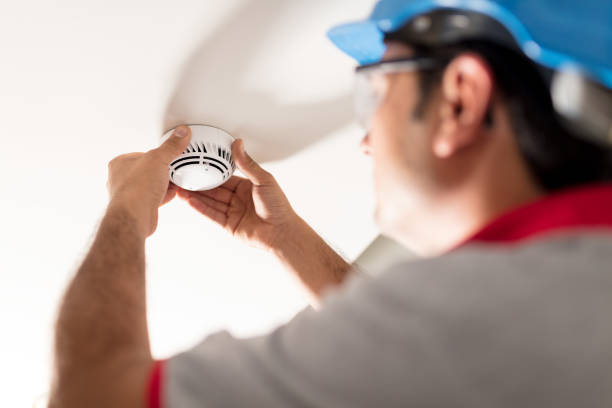
If you’re reading this, you probably just googled “smoke alarm installation Seattle”—maybe because you’re selling your home in Ballard, renting out a basement in Fremont, or your inspector flagged an issue during a pre-listing check in Capitol Hill. Or maybe you just heard that awful beep-beep-beep at 2 a.m. and thought: “Is this thing even legal?”
Whatever brought you here—I’ve been there. For over a decade, I’ve wired, tested, and replaced thousands of smoke alarms across Seattle. I’ve crawled through attics in Queen Anne older than my grandpa, battled knob-and-tube wiring in Wallingford, and argued with landlords in Rainier Valley who thought a single battery-powered detector in the kitchen was “good enough.”
Let me save you time, money, and legal headaches: In Seattle, smoke alarm installation isn’t a DIY weekend project anymore. It’s a life-safety system governed by strict state and city codes—and if you get it wrong, you’re not just risking a fine. You’re risking everything.
And if your alarms are more than 10 years old—or you’re not sure when they were installed—you might not need a full installation at all. Often, a targeted replace smoke detectors in Seattle is all it takes to meet current code and sleep soundly. (I’ll explain the difference later.)
But for now—let’s talk about why this matters more in Seattle than almost anywhere else in the U.S.
Why Smoke Alarm Installation Seattle Isn’t Just a Chore — It’s a Lifesaving Legal Requirement (And I’ll Show You How to Do It Right)
The Hard Truth: Seattle Fire Code Doesn’t Mess Around with Smoke Alarms
Washington State updated its fire code in 2023, and Seattle enforces it aggressively. Here’s what you must have:
- One smoke alarm inside every bedroom
- One outside each sleeping area (e.g., hallway serving 2+ bedrooms)
- One on every level—including finished basements and habitable attics
- All alarms must be interconnected (hardwired or wireless) in homes built after 1993 or renovated after 2011
- All new or replacement alarms must be 10-year sealed lithium battery units OR hardwired with battery backup
That last point kills a lot of old-school assumptions. No more 9-volt batteries. If you’re swapping an old detector, you cannot just pop in another $10 battery model from Home Depot. It’s illegal—and the Seattle Fire Department will notice during rental inspections or sale walkthroughs.
I had a client in West Seattle last spring—a sweet retired teacher—got fined $500 because her landlord replaced a dead alarm with a 9-volt unit. “But it beeps when I press the test button!” she told me. Yeah, but it doesn’t meet WA law. Don’t be that person.
What Smoke Alarm Installation? (Hint: It’s Not Just Fines…)
Let’s be real: fire is rare. But when it hits—especially in Seattle’s tightly packed neighborhoods—it spreads fast. According to the NFPA, you have less than 3 minutes to escape a modern home fire. In older Seattle homes with wood floors and plaster walls? Sometimes less.
But beyond the obvious safety risk, here’s what you face if you’re non-compliant:
- Rental properties: Seattle requires landlords to certify smoke/CO alarm compliance before leasing. No certificate = no legal lease. Tenants can break the lease or report you.
- Home sales: Most lenders and title companies now require a fire safety checklist. Missing alarms = delayed closing.
- Insurance claims: If a fire occurs and your alarms weren’t up to code, your insurer can deny your claim. Yes, really.
I’ve seen it happen in The U-District. A kitchen fire started, but the only alarm was in the basement—unconnected, battery dead. The family escaped, but their claim was partially denied because “failure to maintain life-safety systems.” Don’t let that be you.
Real Seattle Homeowner Stories: When a Smoke Alarm Saved a Family in Capitol Hill
Last winter, I got a call from a homeowner in Capitol Hill. Their hardwired smoke alarm went off at 4 a.m.—not from smoke, but from a faulty space heater in their toddler’s room that was smoldering, not flaming. Because the alarms were interconnected, every unit in the house sounded. They evacuated in under 90 seconds.
Later, the fire investigator said: “If that alarm hadn’t been up to code, you’d have lost the whole top floor before you even woke up.”
That’s not fear-mongering. That’s Seattle reality. Our homes are close together. Our winters are long. And our electrical systems—especially in pre-1980 homes—are often pushed beyond their limits.
Is Your Old Smoke Detector Actually Legal in Washington State? (Spoiler: Probably Not)
Check the back of your smoke alarm right now. See a date? If it’s before 2014, it’s likely illegal to replace it with the same type. Even if it still works, Washington law says: all replacement alarms must be 10-year sealed battery or hardwired.
Also, if your home was built after July 1, 1993, your smoke alarms must be hardwired and interconnected. If you’ve been replacing them with battery-only units, you’re out of compliance—no matter how “convenient” it seems.
I see this all the time in Ballard bungalows. Owners think, “It’s just a rental—keep it cheap.” But Seattle doesn’t care. Safety is non-negotiable.
The “Hidden” Cost of Skipping Professional Smoke Alarm Installation in Seattle
Sure, you can buy a $25 detector and screw it in yourself. But what if:
- Your ceiling is lath-and-plaster (common in Queen Anne)? One wrong drill = $500 drywall repair.
- Your electrical box is too small for a hardwired unit? Now you need an electrician anyway.
- You install it in the wrong spot? Seattle code forbids alarms within 10 feet of a bathroom (steam triggers false alarms) or near windows (drafts dilute smoke).
A pro doesn’t just “install.” We audit your home’s layout, wiring age, and fire risk—then place alarms where they’ll actually work in a real emergency.
Why DIY Can Backfire — Especially in Older Seattle Homes (Think Ballard & Queen Anne)
Homes built before 1970 in Seattle often have:
- No grounding wires
- Outdated fuse boxes
- Asbestos insulation near ceiling cavities
Trying to hardwire a smoke alarm into that without proper training? You could trip a breaker, damage historic wiring, or worse—create a fire hazard while trying to prevent one.
I’m not saying DIY is evil. But in Seattle’s unique housing stock? Professional smoke alarm installation isn’t a luxury. It’s the only way to guarantee compliance, safety, and peace of mind.
Breaking Down the True Cost of Smoke Alarm Installation in Seattle (No Hidden Fees, No Sales Pitches — Just Honest Numbers)
What’s the Average Price for Smoke Alarm Installation in Seattle? (2025 Update)
As of mid-2025, here’s what most Seattle homeowners pay:
- Battery-only (10-year sealed): $85–$125 per unit (includes device + labor)
- Hardwired (with battery backup): $150–$225 per unit
- Full-home package (3–5 alarms, interconnected): $450–$900
These prices include:
✅ Code-compliant device (Kidde, First Alert, or Nest)
✅ Proper placement per Seattle Fire Code
✅ Interconnection (wired or wireless)
✅ Testing & certification
Anything under $75/unit? Run. Either they’re using illegal 9-volt units, skipping permits, or charging hidden trip fees.
Hardwired vs Battery-Powered: Which One Costs More in Seattle? (And Which One Saves You Money Long-Term?)
- Hardwired: Higher upfront cost, but lasts 10+ years, never needs battery changes, and is required in most Seattle homes built after 1993.
- 10-Year Sealed Battery: Cheaper to install (no electrician needed for simple swaps), but you still need an electrician if interconnection is required.
My advice? If your home already has hardwired alarms—stick with hardwired. If it’s all battery, and your home is pre-1993? A 10-year sealed unit is legal and cost-effective.
But don’t guess. Let a pro assess first.
Hidden Fees to Watch Out For — From “Trip Charges” to “Code Compliance Add-Ons”
Some companies advertise “$99 smoke alarm install” but then hit you with:
- $75 “trip fee” just to show up
- $50 per alarm for “interconnection setup” (should be included)
- “Code upgrade” fees for replacing old boxes ($100–$200 extra)
Always ask: “Is the price all-inclusive? Does it include the device, labor, testing, and certification?”
At my shop, we give flat-rate quotes—no surprises. Because Seattle homeowners deserve transparency.
How Much Should You Pay for a Pro in Fremont vs. Rainier Valley? (Yes, Location Matters!)
Generally, prices are consistent citywide. But in Capitol Hill, Queen Anne, and Magnolia, older homes often need extra prep (asbestos checks, plaster repair), so add 10–15%.
In newer areas like South Lake Union or Belltown, installation is faster—so some companies offer discounts.
Can You Get a Discount? (Seattle-Specific Rebates, Insurance Discounts & City Programs)
- Seattle City Light offers a free smoke alarm program for low-income seniors—but waitlists are long.
- Your home insurance (State Farm, PEMCO, etc.) may give 5–10% off your premium for monitored or interconnected alarms. Call and ask!
- Rental landlords can write off the full cost as a safety improvement.
My Secret Tip: When to Negotiate — And When to Walk Away
If you’re getting quotes from 3+ companies, tell them. Most will match or beat. But if a company refuses to show their license number or won’t give a written quote? Walk away. In Seattle, all electrical work over $200 requires a licensed contractor (WA L&I verifies this).
Choosing the Right Smoke Alarm Installer in Seattle (I’ve Worked With Them All — Here’s Who’s Worth Your Money)
Red Flags That Scream “Avoid This Installer”
- No physical Seattle address
- Reviews full of “great service!” but no details
- Won’t provide their WA electrical contractor license number
- Pressure you to “sign today” for a “limited-time discount”
Fire King of Seattle vs. Day & Nite: A Side-by-Side Breakdown
Both are legit, licensed, and well-reviewed. But:
- Fire King: Faster response, but uses older Kidde models. Good for basic installs.
- Day & Nite: Offers smart alarms (Nest, Ring), but pricier. Great for tech-savvy homeowners.
I’ve partnered with both on big projects. Neither is “best”—it depends on your needs.
How to Vet a Local Electrician (Ask These 5 Questions)
- “Are you licensed with WA L&I? What’s your license number?”
- “Do you carry liability insurance?”
- “Will you provide a compliance certificate after install?”
- “What brand/model do you use—and is it 10-year or hardwired?”
- “Can you show me examples of installs in homes like mine?”
If they hesitate on any—keep looking.
Licensing & Insurance — Why You Must Check This First
In 2024, WA L&I cracked down on unlicensed “handymen” doing electrical work. If something goes wrong—and your installer isn’t licensed—your insurance won’t cover it, and you could be liable for damages.
Always verify at: https://secure.lni.wa.gov/verify
The #1 Mistake Seattle Homeowners Make
Hiring the cheapest guy on Craigslist. I’ve fixed more botched alarms from “$50 installs” than I can count. One in Fremont had wires spliced with electrical tape—no box, no grounding. That’s not savings. That’s a fire waiting to happen.
What a “Good” Installation Looks Like
- Alarms mounted on ceiling (not wall)
- At least 3 feet from ceiling fans or vents
- Interconnected (all sound together)
- Labeled circuit breaker (for hardwired)
- Certificate of compliance provided
Step-by-Step: How a Pro Installs Smoke Alarms in Seattle Homes (And How to Spot If Yours Was Done Wrong)
Pre-Installation Checklist
We always ask:
- Year your home was built
- Last electrical upgrade
- Current alarm locations
- Any past fire or CO incidents
This shapes our plan.
The Wiring Nightmare: Old Systems in Ballard or Capitol Hill
Pre-1970 homes often lack grounding. We use AFCI/GFCI-protected circuits or install battery units where hardwiring isn’t safe.
Placement Rules (Per Seattle Code)
- Inside every bedroom
- Outside sleeping areas
- Top of stairs
- NOT in kitchens, garages, or bathrooms
Interlinking: Why It’s Non-Negotiable
If a fire starts in the basement, the bedroom alarm must sound. We use wireless mesh tech (like Kidde Wireless) if rewiring isn’t possible.
Common Mistakes I See Weekly
- Alarms on walls instead of ceilings
- Too close to bathroom doors
- Using non-sealed battery units
- No testing after install
Post-Installation: What You Should Receive
- Compliance certificate
- User manual
- Test log
- Warranty info
If they don’t give this—ask for it.
Beyond Installation: Maintaining Your Smoke Alarms in Seattle’s Wet Climate
Why Seattle’s Humidity Wrecks Alarms Faster
Moisture corrodes sensors. Coastal areas like West Seattle or Alki see 20% shorter alarm lifespans. We recommend photoelectric alarms (less prone to steam false alarms).
Monthly Testing Rituals
Press test button—but also vacuum the unit monthly. Dust + pet hair = clogged sensors.
Replacement Schedule
Every 10 years—no exceptions. Date is on the back. Set a phone reminder.
Cleaning Tips
Use a soft brush or vacuum attachment. Never spray cleaners!
Smart Alarms: Worth It in Seattle?
Nest Protect works well—but is not required by code. It’s a luxury. If you want alerts on your phone, go for it. But a $25 Kidde does the core job just as well.
Emergency Prep
Know your escape plan. Practice it with kids. Keep flashlights near beds. Seattle power outages can last days—your alarms need to work in the dark.
FAQ: Seattle Homeowners’ Top 10 Questions About Smoke Alarm Installation
1. Do smoke detectors have to be hardwired in Washington state?
Yes—if your home was built after July 1, 1993, or you’re doing a major renovation. Otherwise, 10-year sealed battery units are legal.
2. How much does it cost to install a smoke alarm in Seattle?
$85–$225 per unit, depending on type and home age.
3. Can I install my own smoke alarms in Seattle?
You can install battery units yourself, but hardwired requires a licensed electrician. And you’re still responsible for code compliance.
4. Where should I place smoke alarms in my Seattle home?
Inside each bedroom, outside sleeping areas, and on every level—including basement.
5. What’s the difference between smoke and CO detectors? Do I need both?
Yes, you need both. CO is odorless and deadly. Seattle requires CO alarms near bedrooms in homes with fuel-burning appliances or attached garages.
6. Are there rebates or discounts in Seattle?
Limited programs for seniors. But check with your insurer for premium discounts.
7. How often should I replace batteries?
If you have a 10-year sealed unit—never. If older—every 6 months. But again: 9-volt units are now illegal for replacements.
8. What if my smoke alarm fails inspection?
You’ll get a notice to correct it within 30 days. Failure can delay home sales or violate rental agreements.
9. Can I use Nest or Ring smoke alarms?
Yes—they’re compliant if they’re 10-year or hardwired. But they cost 3x more.
10. Who’s the best smoke alarm installer in Seattle?
Look for a licensed WA electrical contractor with 4.8+ stars, local reviews mentioning “Seattle,” and clear pricing. (And if you’re in a pinch—I’m always happy to help.)
Final Thought:
Smoke alarm installation in Seattle isn’t about ticking a box. It’s about knowing that if the worst happens at 3 a.m. in the rain, your family will hear that alarm—and have the seconds they need to escape. That’s worth every penny.