
Need to replace smoke detectors in Seattle? Licensed, local electricians ready to install, repair or upgrade your system — same-day service available.
Let me tell you about a call I got last winter from a homeowner in Wallingford. “My smoke alarm keeps chirping,” he said. “I replaced the battery twice. What’s wrong?”
I asked: “When was it installed?”
He didn’t know.
I came out the next morning. When I pulled the unit down, the manufacture date was 2010. The detector was 13 years old—3 years past its legal life in Seattle.
That chirp wasn’t a battery issue. It was a death rattle. The sensor was dead. In a real fire, it would’ve stayed silent.
He got lucky. But not everyone does.
Every year, the Seattle Fire Department responds to over 1,200 residential fires. And in nearly 30% of fatal home fires, the smoke alarms either weren’t present or didn’t work. Not because of battery failure—but because the units were too old.
If you’re reading this, you’re probably hearing that annoying chirp… or you just moved into a Seattle home and don’t know the age of your detectors. Or maybe you’re selling your house and the inspector flagged your system.
Whatever brought you here—you’re doing the right thing by looking it up. Because in Seattle, smoke detector rules aren’t just recommendations. They’re the law. And ignoring them puts your family—and your home—at real risk.
I’ve replaced thousands of smoke detectors across Seattle—from historic homes in Queen Anne to modern condos in South Lake Union. And in this guide, I’ll walk you through everything you need to know:
- How to tell if your smoke detectors are expired
- Seattle’s strict code requirements (including hardwired vs. battery)
- Why “just replacing the battery” isn’t enough
- What neighborhoods face the highest risk (looking at you, Fremont and Beacon Hill)
- And exactly what to expect when you call a licensed pro
This isn’t a sales pitch. It’s your smoke detector survival checklist—written by someone who’s seen what happens when detectors fail.
Why “Replacing the Battery” Isn’t Enough in Seattle Homes
Most homeowners think a chirping smoke alarm just needs a new battery. That’s true… once. But if it chirps again in a few weeks, the problem isn’t the battery—it’s the detector itself.
The 10-Year Rule: Seattle Law You Can’t Ignore
Washington State—and Seattle specifically—requires that all smoke detectors be replaced every 10 years, no exceptions. Why? Because the sensors degrade over time. Dust, humidity, and age reduce their sensitivity. After 10 years, they simply stop working reliably.
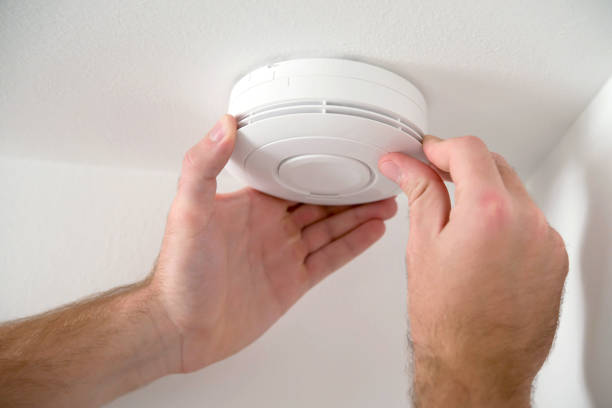
Check your detector right now: flip it off the ceiling and look at the back. You’ll see a manufacture date (e.g., “MFG 2015”). If it’s older than 10 years—replace it today.
Battery vs. Hardwired: What Seattle Requires
- Homes built before 1992: Battery-only detectors are allowed… but must be 10-year sealed units (no removable batteries).
- Homes built after 1992: Must have hardwired, interconnected smoke alarms—meaning when one goes off, they all do.
- All homes: Require detectors inside every bedroom, outside sleeping areas, and on every level.
In Capitol Hill, I’ve seen inspectors fail home sales because the upstairs bedroom had no detector—even though the rest of the house was perfect.
The Humidity Trap: Why Seattle’s Weather Kills Detectors Faster
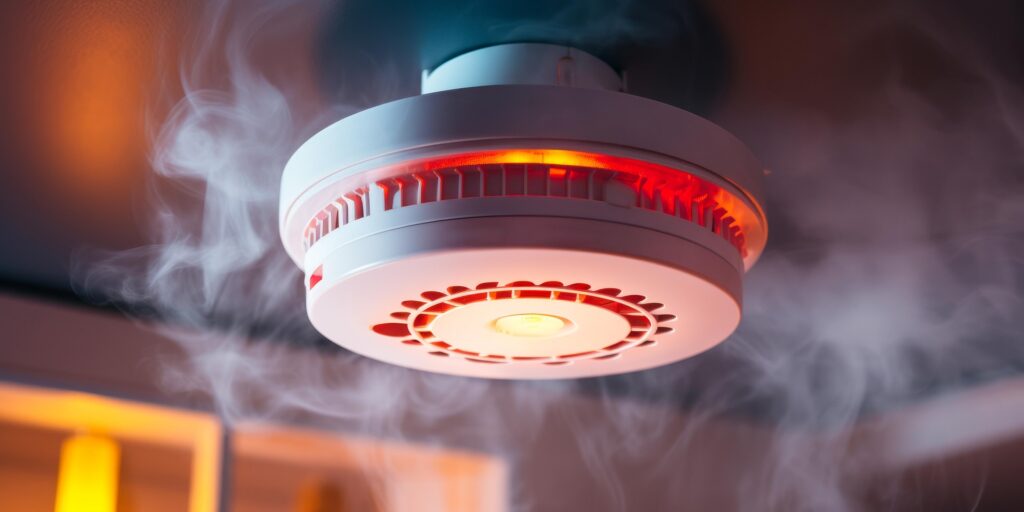
Seattle’s constant dampness doesn’t just affect your panel—it corrodes the internal circuitry of smoke detectors. Units in basements, garages, or near bathrooms often fail before 10 years. If your detector is near a kitchen or laundry room, steam accelerates wear.
In West Seattle last month, I replaced a hardwired unit that was only 8 years old—but the sensor was caked in moisture residue. It wouldn’t have detected smoke from a slow-smoldering fire.
Replace Smoke Detectors in Seattle: Neighborhood-by-Neighborhood Risks
Your zip code changes your risk—and your requirements.
Fremont & Phinney Ridge: Older Homes, Outdated Systems
Many homes here were built in the 1920s–40s. Original wiring often can’t support modern hardwired systems. Result? Homeowners install battery units—but forget they must be 10-year sealed type (not the 9V kind you change yearly).
I’ve had to do full rewires + detector upgrades in Fremont ADUs to meet code for rental permits.
Capitol Hill & First Hill: Historic District Rules
If your home is in a Seattle historic district, you can’t just drill holes for new wiring. You need:
- Surface-mounted conduit (painted to match trim)
- Low-profile detectors that don’t ruin original ceilings
- Permits that respect preservation guidelines
We work with Seattle Landmarks Board to get approvals fast.
Beacon Hill & Rainier Valley: Post-War Homes with Hidden Gaps
Homes from the 1950s–70s often have only one detector in the hallway—violating today’s “inside every bedroom” rule. When families add bedrooms (for rentals or kids), they forget to add detectors.
A failed inspection = delayed sale. Don’t let that be you.
Ballard & Green Lake: Modern Homes, But Old Detectors
Even in newer builds, detectors aren’t maintained. I’ve found 2018 units already failing because homeowners painted over them (yes, it happens!) or blocked them with shelves.
What to Expect When You Call to Replace Smoke Detectors in Seattle
When you call a licensed electrician, here’s exactly what happens:
Step 1: The Full Home Assessment
We don’t just swap units. We:
- Check location compliance (bedrooms, levels, hallways)
- Test interconnectivity (for hardwired systems)
- Verify power source (hardwired vs. battery)
- Note manufacture dates on all units
This takes 20–30 minutes—and it’s free.
Step 2: Code-Compliant Replacement
- Hardwired homes: We install dual-sensor (photoelectric + ionization) interconnected units
- Battery-only homes: We use 10-year sealed lithium units (no maintenance for a decade)
- All units meet Seattle Fire Code and UL 217 standards
Step 3: Permit & Inspection Handling
Seattle requires a permit for hardwired smoke alarm replacement. We:
- Pull the permit online through SDCI
- Schedule the city inspection
- Handle any corrections
You don’t do a thing.
Step 4: Post-Install Peace of Mind
We show you how to test your system monthly. And if a unit chirps within a year? We’ll replace it—no charge.
When to Replace Smoke Detectors in Seattle: Warning Signs
Call us if:
- Your detector chirps weekly (even with new batteries)
- It’s older than 10 years (check the back!)
- You’re selling your home and need a pre-inspection update
- You’ve added a bedroom or ADU
- You live in a historic Seattle home and need a discreet install
Don’t wait for the fire department to cite you. Prevention is faster, cheaper, and safer.
If you’re searching for “replace smoke detectors in Seattle,” you’ve already taken the most important step. Now take the next one: call a licensed, local electrician who knows Seattle’s fire codes—and can get your home protected by tonight.
📞 Call now: (866) 227-8161
**Frequently Asked Questions **(FAQs)
Do I need a permit to replace smoke detectors in Seattle?
Only if you’re replacing hardwired units. Battery-only replacements don’t require a permit.
Can I just buy a detector from Home Depot and install it myself?
For battery units: yes, but only if it’s a 10-year sealed model.
For hardwired: no—Seattle requires a licensed electrician.
How long does installation take?
Most homes: under 2 hours.
Are interconnected alarms really necessary?
Yes. Seattle code requires it for homes built after 1992. It saves lives—smoke spreads fast.
Do you service all Seattle neighborhoods?
Yes—Fremont, Ballard, Capitol Hill, West Seattle, Queen Anne, Beacon Hill, and more.
ف
“In West Seattle last month, I replaced a hardwired unit that was only 8 years old—but the sensor was caked in moisture residue. It wouldn’t have detected smoke from a slow-smoldering fire.”
If your home’s electrical system is old or exposed to Seattle’s damp climate, your wiring could be at risk too. Learn why your breaker keeps tripping in Seattle and what it means for your home’s safety.
→
“Learn why your breaker keeps tripping in Seattle and what it means for your home’s safety.”
→ “Emergency Electrical Service for Tripping Breaker in Seattle”