
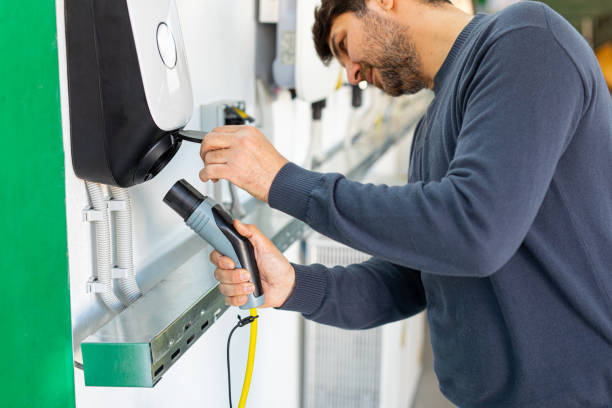
Electrician for EV Charger Installation in Seattle I’ll be honest with you: when my neighbor in Fremont bought his Tesla Model 3, he thought installing a home charger would be as simple as plugging in a toaster. He went online, ordered a “plug-and-play” Level 2 unit, and tried to run it off his garage outlet.
Three hours later, his main breaker tripped. The next day, his garage outlet was warm to the touch. And by the weekend? He was calling me—frustrated, worried, and $300 poorer from a fried circuit.
He’s not alone. Every week, I get calls from Seattle homeowners who bought an EV without realizing their electrical system isn’t ready for it. They don’t know that Seattle has strict rules about EV charger installations. They don’t know that most garages in Capitol Hill or Ballard weren’t wired for 40–50 amps. And they definitely don’t know that DIY EV charger installs are one of the top causes of permit failures and insurance claim denials in King County.
If you’re reading this, you’re smarter than that. You’re not just buying a charger—you’re preparing your home for the future. And that starts with choosing the right electrician for EV charger installation in Seattle.
I’ve installed over 300 EV chargers across Seattle—from tiny cottages in West Seattle to modern ADUs in Phinney Ridge. And in this guide, I’ll walk you through everything you need to know:
- Why your home’s panel might not be ready (even if it “looks fine”)
- How Seattle’s weather and codes affect your install
- What neighborhoods need special attention (looking at you, Fremont and Queen Anne)
- And exactly what to expect when you call a licensed pro
This isn’t a sales pitch. It’s your pre-installation checklist—written by someone who’s seen what happens when corners are cut.
Why Your Seattle Home Isn’t “Plug-and-Play” Ready for an EV Charger
Most EV owners assume their garage has a 240V outlet. It doesn’t. And even if it does, it’s almost certainly not rated for continuous 30–50 amp loads.
The Panel Capacity Myth: “I Have a 200-Amp Panel, So I’m Good”
Having a 200-amp service doesn’t mean you can just add a 48-amp EV charger. Here’s why:
- Your total load includes heat pumps, dryers, ovens, and lighting
- The **National Electrical Code **(NEC) requires a load calculation before adding high-draw circuits
- Seattle enforces this strictly—no load calc = no permit = no legal install
I’ve done load calculations in Green Lake homes with 200-amp panels that only had 25 spare amps. Adding a Level 2 charger would’ve overloaded the system.
The Garage Outlet Trap: NEMA 14-50 Isn’t Always Enough
Yes, many EVs come with a NEMA 14-50 plug. But:
- Most garage outlets are on 20-amp circuits—not 50-amp
- Running a 40-amp continuous load on a 50-amp circuit requires 6-gauge wire, not the 10-gauge you probably have
- And if your outlet is near a sink or washer? Seattle requires GFCI protection, which can cause nuisance tripping with some EVSEs
In Beacon Hill last month, I found a homeowner using a 14-50 outlet wired with 12-gauge wire. It was a fire hazard waiting for a rainy day.
Seattle’s Rain and Wiring: Why Underground Runs Fail
If your panel is in the garage but your meter is outside (like 80% of Seattle homes), you need a conduit run—and Seattle requires it to be underground, in PVC, with proper burial depth.
But here’s the kicker: moisture gets into conduits. And when it does, it causes ground faults that trip GFCI breakers. I’ve had to re-pull wires in West Seattle because the original installers didn’t seal the conduit ends.
Electrician for EV Charger Installation in Seattle: Neighborhood-Specific Challenges
Not all Seattle homes are created equal. Your zip code changes everything.
Fremont & Phinney Ridge: ADUs, Alley Houses, and Shared Panels
You added an ADU. Great! But who’s powering the EV charger—the main house or the ADU?
- If it’s the main panel, you might need a subpanel in the ADU
- If it’s a shared meter, Seattle requires separate metering or load-sharing systems
- And if your alley house has an underground feed? Permit approval takes extra time
I’ve installed dual chargers in Fremont ADUs with smart load management so both cars can charge without tripping the main.
Capitol Hill & First Hill: Historic Homes, No Room for Upgrades
Those 1910 homes have knob-and-tube wiring and 60-amp panels. You can’t just “add a circuit.”
- Solution: Panel upgrade to 200-amp + partial rewire
- Bonus: Seattle offers energy upgrade rebates that cover part of the cost
- But you must work with historic preservation rules—no ugly surface conduit on original walls
West Seattle & Magnolia: Sloped Lots, Long Cable Runs
Hills mean long distances from meter to garage. That causes voltage drop, which:
- Slows charging
- Stresses your EV’s onboard charger
- Can void your vehicle warranty
Fix? Use 4-gauge or 2-gauge wire instead of 6-gauge. Yes, it costs more—but it’s code-compliant and future-proof.
Ballard & Green Lake: The “EV Boom” Overload
These neighborhoods have the highest EV adoption in Seattle. And many homes still run on 100-amp service.
- Result: Tripping main breakers when heat pumps and EV chargers run together
- Fix: Smart chargers (like Wallbox or Emporia) that throttle based on home load
I install these with whole-home energy monitors so you never overload your panel again.
*If your main breaker trips when you start charging, it’s a sign your electrical system is already overloaded. Learn why your breaker keeps tripping in Seattle and what it means for your home’s safety

What to Expect from a Real Electrician for EV Charger Installation in Seattle
When you call a licensed pro, here’s exactly what happens:
Step 1: The Pre-Install Assessment (We Come to You)
We don’t quote blind. We:
- Check your main panel capacity
- Measure distance from panel to parking spot
- Determine if you need a subpanel or main upgrade
- Review Seattle SDCI requirements for your zone
This takes 30–45 minutes. And yes—we do it same-day.
Step 2: Permit Handling – We Do All the Paperwork
Seattle requires a permit for any new 240V circuit. We:
- Pull the permit through SDCI’s online portal
- Schedule the rough-in and final inspections
- Handle any city feedback (like conduit depth or labeling)
You don’t lift a finger.
Step 3: The Install – Clean, Code-Compliant, and Fast
Most Level 2 installs take 4–6 hours. We:
- Run proper gauge wire in conduit
- Install a dedicated double-pole breaker
- Mount your charger at ergonomic height
- Test for ground faults, polarity, and GFCI function
And we leave your garage cleaner than we found it.
Step 4: Post-Install Support
Got a question a week later? Call us.
Charger acting weird? We’ll troubleshoot—no service fee.
Because we’re not a franchise. We’re your Seattle neighbors.
When to Call an Electrician for EV Charger Installation in Seattle
Call us if:
- You just bought an EV and have no 240V outlet
- Your garage outlet feels warm when charging
- You’re planning to buy an EV and want to get your home ready
- You’re adding a second EV to your household
- You live in a historic district and need a discreet install
Don’t wait until you’re stranded with a dead battery. Seattle’s rainy winters make home charging non-negotiable.
If you’re searching for “electrician for EV charger installation Seattle,” you’ve already done the smartest thing. Now take the next step: call a licensed, local pro who knows Seattle’s codes, weather, and neighborhoods—and can get you charging safely by tomorrow.
**Frequently Asked Questions **(FAQs)
Do I need a permit for an EV charger in Seattle?
Yes. Any new 240V circuit requires a permit from Seattle SDCI. We handle it for you.
Can I use an extension cord or dryer outlet?
No. It’s a fire hazard and violates code. Plus, it voids your EV warranty.
How long does installation take?
Most installs are completed in one day (4–6 hours).
Do you install Tesla, ChargePoint, Wallbox, and others?
Yes. We’re brand-agnostic and certified on all major Level 2 chargers.