
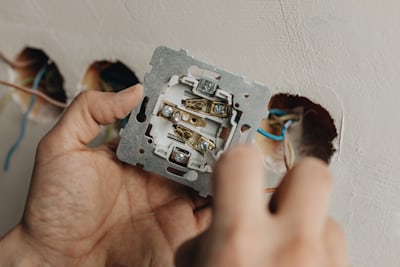
Need an electrician for home wiring in Seattle? Licensed, local & ready to fix flickering lights, old panels, or unsafe outlets—same-day service available.
If you’re reading this, there’s a good chance something in your Seattle home isn’t right with the wiring. Maybe your lights flicker when the rain starts. Maybe your outlets feel warm after you plug in the coffee maker. Or maybe you just bought a charming 1920s bungalow in Fremont and realized the electrical panel looks like it hasn’t been touched since Woodrow Wilson was president.
Whatever brought you here—you’re not imagining things. And you’re not alone. Every week, I get calls from homeowners across Seattle who thought their wiring issues were “just normal for an old house.” By the time they call, they’re often one tripped breaker away from a real emergency.
I’ve been working on home wiring in Seattle for over a decade—from the steep hills of Queen Anne to the waterfront cottages of West Seattle. And in that time, I’ve learned one thing: Seattle doesn’t play by the same rules as other cities. Our weather, our housing stock, and our city codes demand a different kind of electrician. Not just someone who can wire a house—but someone who understands what makes Seattle homes unique.
This isn’t a sales pitch. This is a guide—written by a local electrician who’s seen it all—to help you know when your home needs real wiring help… and what to do before it’s too late.
Why Seattle Homes Demand Special Wiring Attention
Seattle is beautiful, but it’s tough on electrical systems. Our climate alone—over 150 days of rain a year, high humidity, and salty coastal air in some areas—creates conditions that accelerate corrosion in outlets, junction boxes, and service panels. Moisture doesn’t just cause mold; it creates conductive paths where there shouldn’t be any, increasing the risk of shorts, ground faults, and even fires.
Then there’s the age factor. A huge portion of Seattle’s housing was built before 1960. That means:
- Knob-and-tube wiring (common in Capitol Hill, Leschi, and Madrona)
- Aluminum branch circuits (popular in the 60s and 70s—common in West Seattle and Northgate)
- 60-amp or 100-amp service panels that were fine for one refrigerator and a radio… but can’t handle modern loads like heat pumps, EV chargers, or home offices
But here’s the real kicker: Seattle’s electrical codes are stricter than Washington State’s baseline. The city requires:
- GFCI protection in virtually all living areas—not just kitchens and bathrooms
- AFCI (arc-fault) protection in every bedroom, living room, and hallway
- Hardwired smoke alarms interconnected throughout the house
- Permits and inspections for almost any wiring work beyond replacing a single outlet
Try to hire an electrician from Tacoma or Bellevue who doesn’t know these rules, and you’ll end up with a system that works… but fails inspection, voids your insurance, or worse—creates a hidden hazard.
That’s why you don’t just need “an electrician.” You need an electrician for home wiring in Seattle—someone who’s pulled permits at City Hall, argued with inspectors (respectfully), and knows how to upgrade a 1930s home without tearing down all the original walls.
Signs Your Seattle Home Needs Wiring Help (Before It’s an Emergency)
Most electrical emergencies don’t start with a bang. They start with small, easy-to-ignore signs. Here’s what to watch for—and why you shouldn’t wait.
Flickering or Dimming Lights – Especially in Older Neighborhoods
If your lights dim every time the fridge kicks on, or flicker during a rainstorm, it’s not “just the weather.” In older Seattle homes—especially in Fremont, Wallingford, and Green Lake—this usually means overloaded circuits or a failing neutral connection. Both are serious. A loose neutral can send voltage spikes through your entire house, frying electronics and creating fire risk.
Warm, Buzzing, or Discolored Outlets
An outlet should never feel warm. Ever. Warmth means resistance—and resistance means heat buildup. In tightly packed Seattle neighborhoods like Ballard or Beacon Hill, where homes share walls or are built close together, an electrical fire can jump from unit to unit in minutes. I’ve responded to calls in Columbia City where a homeowner ignored a “slightly warm” outlet for weeks—only to discover melted insulation behind the wall.
Frequent Circuit Breaker Trips
Breakers trip for a reason: overload, short circuit, or ground fault. If the same breaker trips repeatedly—even after you unplug everything—it’s not the breaker’s fault. It’s a sign of deeper wiring issues. In Seattle’s rainy climate, ground faults are especially common as moisture seeps into outdoor outlets or old junction boxes.
Two-Prong Outlets Still in Use
Yes, two-prong outlets are “grandfathered in.” But that doesn’t make them safe. They lack a ground wire, which means no path for stray electricity to escape safely. If a fault occurs, that electricity could go through you instead. And if you’re remodeling—even just updating a bathroom—the city requires grounded, GFCI-protected outlets. No exceptions.
Burning Smells or Sparking from Switches
This is a drop-everything emergency. A burning smell near an outlet or switch almost always means arcing—electricity jumping through air. It creates intense heat and can ignite wood framing in seconds. If you smell this, turn off the circuit at the panel and call a licensed electrician immediately.
No GFCI Protection in Wet or Outdoor Areas
Seattle’s building code requires GFCI outlets within 6 feet of any water source—including laundry rooms, garages, basements, and even some living areas. If your home still has standard outlets in these zones, you’re not just out of code—you’re at risk of electrocution, especially in our damp environment.
The Hidden Dangers of Outdated Wiring in Seattle Neighborhoods
Not all old wiring is created equal. And in Seattle, the type of wiring in your walls tells a story about your home’s risk level.
Knob-and-Tube Wiring – Common in Pre-1940 Homes
Found in historic districts like Capitol Hill, Harvard-Belmont, and Madrona, knob-and-tube (K&T) was state-of-the-art in its day. But it has no ground wire, uses cloth insulation that dries and cracks over time, and wasn’t designed for modern electrical loads. Worse: many Seattle homeowners have insulated over K&T wiring, which traps heat and creates a fire hazard (the National Electrical Code explicitly forbids this). If you have K&T, you don’t necessarily need a full rewire—but you do need a professional assessment.
Aluminum Wiring – The Silent Risk in 1960s–70s Builds
Widespread during the copper shortage of the 1960s, aluminum wiring is common in West Seattle, Lake City, and North Seattle. The problem? Aluminum expands and contracts more than copper, which can loosen connections over time. Loose connections = heat = fire. The fix isn’t always a full rewire; modern solutions like COPALUM crimps or AlumiConn connectors can make aluminum wiring safe—but only when installed by someone trained in the technique.
Overloaded Circuits in Modernized Old Homes
This is the #1 issue I see in Fremont and Phinney Ridge: homeowners add a Level 2 EV charger, a mini-split heat pump, and a home office to a 1920s house with a 100-amp panel and 10 circuits. The result? Constant tripping, dimming lights, and stressed wiring. The solution isn’t more power strips—it’s a load calculation, possible panel upgrade, and dedicated circuits for high-draw appliances.
How Seattle’s Electrical Codes Affect Your Home Wiring Project
You can’t DIY your way through Seattle’s electrical rules. And hiring someone who doesn’t know them can cost you time, money, and safety.
When Do You Need a Permit in Seattle?
Almost always. According to Seattle Department of Construction & Inspections (SDCI), you need a permit for:
- Adding new circuits
- Upgrading your service panel
- Replacing your main service
- Installing EV chargers or heat pumps
- Converting a garage or basement to living space
Replacing a single outlet or switch? Usually exempt. But once you open a wall or add capacity—you need a permit.
The Inspection Process – What the City Actually Checks
After work is done, a city inspector will verify:
- Correct wire gauge for the load
- Proper box fill (not overcrowded)
- GFCI/AFCI protection where required
- Grounding continuity
- Panel labeling and accessibility
Fail inspection? You’ll need to fix it—and pay for another visit.
GFCI and AFCI Requirements by Room
- GFCI: Required in kitchens, bathrooms, garages, basements, laundry rooms, outdoors, and within 6 feet of sinks
- AFCI: Required in all living areas—bedrooms, living rooms, hallways, even closets
These aren’t suggestions. They’re life-saving devices.
Panel Upgrades: 100A vs 200A – What’s Right for You?
Most Seattle homes built before 1990 have 100-amp service. Today, that’s barely enough for a modern household. If you have:
- Electric heating or water heater
- EV charger
- Heat pump
- Home office with servers or workstations
…you likely need 200-amp service. And yes—Seattle requires conduit for all new underground service runs, which adds complexity (and why local experience matters).
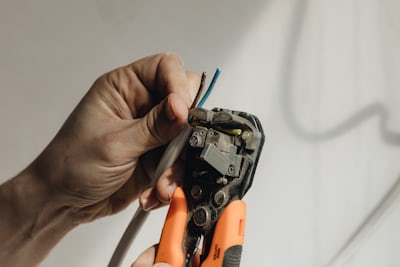
What a Real Home Wiring Electrician in Seattle Actually Does
This isn’t just about running wires. It’s about diagnosing your home’s electrical story—and planning a solution that’s safe, code-compliant, and respectful of your home’s character.
The Full Home Electrical Assessment
When I visit a Seattle home, I don’t just glance at the panel. I:
- Map every circuit
- Test grounding and polarity
- Check for double-tapped breakers or open neutrals
- Identify outdated or dangerous wiring types
- Review your actual power usage vs. panel capacity
This assessment is the foundation of any real solution.
Rewiring Strategies – Full vs Partial
- Full rewire: Best for homes with knob-and-tube or severe aluminum issues. Involves replacing all branch circuits. Often done during major remodels.
- Partial rewire: Focuses on high-risk areas (kitchen, bathroom, bedrooms) or high-load rooms (garage for EV, office). Less invasive, more affordable.
- Concealed upgrades: Using fishing techniques to run new wires through walls without demolition—ideal for historic homes in Harvard-Belmont or Queen Anne.
Working with Seattle’s Historic Home Guidelines
In designated historic districts, you can’t just rip out walls. We coordinate with preservation officers to find solutions that meet code without destroying character—like using surface-mounted raceways painted to match trim, or upgrading panels discreetly.
Wiring Challenges by Seattle Neighborhood
Every part of Seattle has its own electrical personality.
Fremont & Phinney Ridge – Old Bungalows, New Demands
These neighborhoods are full of 1910–1930 craftsman homes—charming, but electrically underserved. Add an ADU, an EV, and a home studio, and you’ve got a recipe for overload. The key? Subpanels in garages or ADUs, and careful load balancing.
Capitol Hill & First Hill – Densely Packed, High Load
With converted apartments and small lots, these areas see heavy electrical use per square foot. Shared walls mean fire barriers matter, and outdated panels can’t keep up. AFCI protection is non-negotiable here.
West Seattle – Aluminum Wiring & Moisture
The peninsula’s coastal air accelerates corrosion. Combine that with 1970s aluminum wiring, and you’ve got a high-risk combo. Proper terminations and moisture-resistant boxes are essential.
Beacon Hill & Rainier Valley – Post-War Homes Need Upgrades
Built fast after WWII, these homes often have 60–100 amp panels and minimal circuits. As families add tech and appliances, the systems buckle. Panel upgrades are common—and often overdue.
Queen Anne & Magnolia – Sloped Lots, Long Cable Runs
Hills mean long distances from meter to panel. That can cause voltage drop, leading to motor burnout (in fridges, ACs, etc.). We compensate with larger wire gauges and strategic panel placement.
Safety First – Protecting Your Family and Home
In Seattle, electrical safety isn’t optional—it’s survival.
How Proper Grounding Saves Lives in Rainy Seattle
Grounding gives stray electricity a safe path into the earth. In our wet climate, it’s the difference between a minor shock and a fatal one. If your home lacks grounding (common in pre-1960 builds), we can install GFCI protection as a retrofit safety net—even without running new ground wires.
Smoke Detectors and Hardwired Alarms
Seattle requires interconnected, hardwired smoke alarms on every level and in every bedroom. Battery-only units don’t cut it. And they must be less than 10 years old. We test and replace them as part of every major wiring job.
Surge Protection at the Panel Level
Your power strip won’t stop a lightning-induced surge. Only a whole-house surge protector installed at your main panel can. Given Seattle’s storm frequency, this is a smart, code-compliant upgrade.
Don’t Wait for a Breaker to Trip—Act Before It’s Too Late
I get it. Wiring is invisible. It’s easy to ignore until it’s not. But in Seattle, that mindset is dangerous. Between our aging homes, wet climate, and strict safety standards, proactive wiring care isn’t a luxury—it’s a necessity.
If your home shows any of the signs above—or if it hasn’t had an electrical check in over 10 years—it’s time to talk to someone who lives, works, and pulls permits in Seattle. Not a national franchise. Not a handyman with a multimeter. A licensed, local electrician who knows what your house is up against.
We’re not here to scare you. We’re here to keep your lights on, your family safe, and your home up to code—the Seattle way.